
Home Blog Page 4

Outrage as Gospel Singer Mary Claire Suffers Brutal Acid Attack

0
Outrage as Gospel Singer Mary Claire Suffers Brutal Acid Attack

Kenyans have taken to social media in large numbers to demand justice for gospel singer Mary Claire, who is fighting for recovery after a horrific acid attack that left her with severe injuries.

The incident has sparked widespread condemnation online, with the hashtag #JusticeForMaryClaire trending as Kenyans demand accountability and stronger action against perpetrators of such violent crimes. Many have also raised alarm over the increasing cases of gender-based violence and the growing use of acid as a weapon.

Mary Claire, who is affiliated with Redemption Ministers, was attacked last week while walking home with her friend, Sarah Watere.

According to eyewitness accounts, the assailant approached her carrying a container filled with a corrosive substance and suddenly splashed it on her face before attempting to escape.

Witnesses described the incident as a coordinated attack involving two individuals. One suspect allegedly carried out the assault, while another waited nearby on a motorbike to facilitate a quick getaway.

“The guy came holding a container with the acid, then splashed it on her. After that, he tried to escape through nearby bushes. They were two. One was on a motorbike, ready to escape,” an eyewitness recounted.

However, the plan was thwarted after members of the public quickly responded, surrounding the suspects. The motorbike rider reportedly fled, abandoning his accomplice, who was cornered and beaten by an angry crowd.

During the chaos, a phone believed to belong to the suspect rang, drawing further attention. Witnesses say the crowd forced the suspect to answer the call on loudspeaker, where the caller allegedly asked whether the “job” had been completed—raising suspicions of a premeditated attack.

“People forced him to answer the call on loudspeaker. The caller asked, ‘Have you finished the job?’ That’s when the crowd became more agitated,” the eyewitness added.

Mary Claire’s friend, Sarah Watere, gave a chilling account of the moments immediately after the attack, describing the devastating effects of the chemical burns.

“The next thing I saw was Claire’s clothes melting. We were screaming. She told me, ‘Sarah, I’m dying, get me water, wash my face,’” she said.

The injured singer was rushed to Kenyatta National Hospital, where she is currently receiving treatment. Her condition has sparked widespread concern, with many Kenyans expressing solidarity and urging authorities to act swiftly.

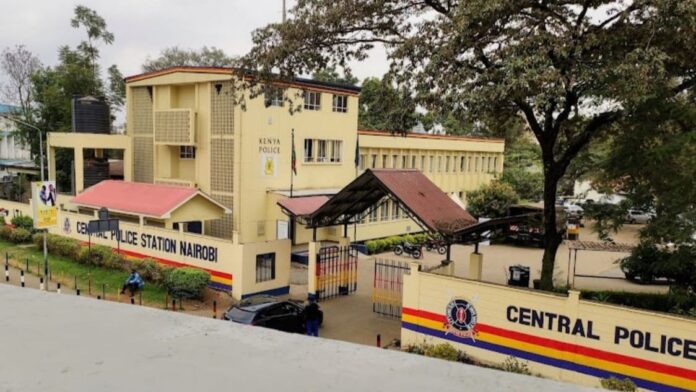
Police have since arrested the main suspect, who is being held at Kibera Police Station and is expected to be arraigned in court. Detectives are continuing investigations to establish the motive behind the attack.

In a further development, authorities also arrested the victim’s alleged ex-boyfriend in Kibera after the suspect reportedly claimed he had been sent to carry out the assault.

As investigations continue, pressure is mounting on law enforcement agencies to ensure a thorough probe and deliver justice for the young singer, whose life has been dramatically altered by the vicious attack.

KUCCPS Introduces New University Placement Criteria for 2026/2027 Academic Year

0
KUCCPS Introduces New University Placement Criteria for 2026/2027 Academic Year

The Kenya Universities and Colleges Central Placement Service (KUCCPS) has announced a major overhaul of the criteria used to place students into university degree programmes, with the new system set to take effect in the 2026/2027 academic cycle.

According to KUCCPS, the revised framework has already been approved following extensive consultations with key stakeholders, including regulatory and professional bodies.

“The criteria review process began last year and, following validation by stakeholders and approval by the KUCCPS Board, will be implemented during placement to degree programmes in the 2026/2027 cycle,” the placement agency said in a statement.

The validation exercise was conducted on March 18 at Kirinyaga University and brought together top education officials, including Higher Education Secretary Carol Hunja, who represented Principal Secretary Beatrice Inyangala.

Also present were KUCCPS Board Chair Cyrus Gituai, CEO Mercy Wahome, Teachers Service Commission (TSC) Chair Jamleck Muturi, and Prof Mike Kuria, CEO of the Commission for University Education (CUE), who also chairs the Placement Criteria Review Committee. Vice chancellors and principals from both public and private universities attended the meeting.

Current Placement System

At present, KUCCPS places students into degree programmes based on merit, with a minimum requirement of a C+ grade in the Kenya Certificate of Secondary Education (KCSE). Placement also considers subject-specific cluster points and student preferences.

An affirmative action policy—targeting gender equity, persons with disabilities and learners from marginalised regions—is applied to improve access to higher education.

Cluster weighted points remain the primary determinant, calculated from performance in four relevant subjects. Students are then ranked from highest to lowest scores for each programme, with the last admitted student determining the course cut-off point.

Placement further depends on the choices made by students and the capacity declared by universities, with slots allocated competitively until all available spaces are filled.

Shift Away from C+ Minimum

The new criteria signals a significant policy shift, including plans to scrap the C+ minimum entry grade for university admission. The move is aimed at aligning higher education access with the evolving Competency-Based Education (CBE) system.

Earlier, KUCCPS CEO Mercy Wahome indicated that the current threshold was no longer sustainable, particularly after the 2025 KCSE results revealed that a majority of candidates fell below the required grade.

Out of 993,226 candidates who sat the 2025 KCSE exams, only about 270,000—roughly 27.18 per cent—attained a C+ and above, leaving more than 722,000 students to seek placement in colleges and Technical and Vocational Education and Training (TVET) institutions.

Expanding Access to Higher Education

The introduction of the revised placement criteria is expected to broaden access to university education while maintaining fairness and competitiveness in the allocation process.

KUCCPS says the changes are part of ongoing reforms to ensure the placement system remains responsive to the country’s education needs and labour market demands.

Family of Missing Driver to Record Statement as Probe into Raphael Tuju Disappearance Intensifies

0
Family of Missing Driver to Record Statement as Probe into Raphael Tuju Disappearance Intensifies

The family of Steve Mwanga, the missing driver of former Cabinet Secretary Raphael Tuju, is expected to record a statement with police on Monday as investigations into the mysterious disappearance gather pace.

A family spokesperson confirmed that Mwanga’s relatives will present themselves at Karen Police Station to formally assist detectives in pursuing the matter.

“As it stands now, people are only discussing Tuju while our kin Steve is also missing. Police insisted they wanted his child or wife to record the statement, and that is what we will do today,” the spokesperson said.

Mwanga, who also doubles as Tuju’s aide, is a politician who previously contested the Ugenya parliamentary seat unsuccessfully.

Both Tuju and Mwanga have been missing since Saturday night, with no communication from either of them. Their sudden disappearance has raised concern, particularly after Tuju’s vehicle was found abandoned by the roadside.

The car was discovered along Miotoni Lane in Karen with its hazard lights still on. A security guard from a nearby institution alerted authorities, prompting a swift response from officers based at Karen Police Station.

The Directorate of Criminal Investigations (DCI) has since launched a full-scale investigation following a missing persons report filed by Tuju’s family on Sunday, March 22, 2026.

Detectives believe the two may have been abducted by unknown individuals for reasons that remain unclear. The recovered vehicle has been towed to Karen Police Station, where forensic experts are examining it for clues.

Efforts to reach Tuju have so far been unsuccessful, with his mobile phone reportedly switched off.

A specialised investigative team has been deployed and is working alongside other government agencies to establish the circumstances surrounding the disappearance.

The DCI also revealed that attempts by investigators to access Tuju’s residence along Mwitu Drive were unsuccessful after the family denied entry, urging all parties to cooperate fully to ensure a thorough and swift investigation.

Authorities are now appealing to members of the public who may have information about Tuju or Mwanga’s whereabouts to come forward. Police are particularly interested in anyone who may have seen the two, their vehicle, or any suspicious activity in the Miotoni Lane and greater Karen area before, during, or after March 21.

Police expressed optimism on Monday that ongoing efforts will lead to a breakthrough in locating the missing individuals.

11 Students Plunge Into Septic Tank While Rushing to See President Ruto in Kapsabet

0

Eleven students from Kapsabet School for the Deaf were rushed to hospital on Thursday morning after the septic tank they were standing on collapsed beneath them as they scrambled to catch a glimpse of President William Ruto’s passing motorcade.

The incident occurred when the students, eager to see the Head of State, gathered on top of an old septic tank — approximately 20 feet long — situated within the school compound. The structure gave way under the weight, sending the students plunging into it.

First Responders on Scene

The incident was confirmed by Kapsabet County CEC Angeline Kirui, who was among the first officials to arrive at the scene. Rescuers and County Disaster Management officers responded swiftly, pulling the injured students from the collapsed tank before rushing them to Kapsabet County Referral Hospital for treatment.

The extent of the students’ injuries has not been fully disclosed, but all eleven were confirmed to have been hospitalised.

President Ruto Makes Unscheduled Stop

Upon receiving reports of the tragedy, President Ruto halted his motorcade and made an unscheduled stop at the school to personally assess the situation. The Head of State expressed regret over the incident and offered his condolences to the affected students and the school community.

In a show of support, President Ruto pledged Ksh. 5 million toward the development of infrastructure at the school — a facility that serves learners with hearing impairments who are among Kenya’s most vulnerable student populations.

The President thereafter proceeded to his scheduled destination at Kapsabet Girls.

Questions Over School Infrastructure

The incident has raised fresh concerns about the state of infrastructure in public schools, particularly those serving students with special needs. The fact that students were standing on a decades-old septic tank points to deeper questions about safety standards and the maintenance of school facilities across the country.

The collapse serves as a stark reminder that aging infrastructure in learning institutions poses a real and present danger to students. Advocacy groups and education stakeholders are likely to call for urgent audits of physical structures in schools — especially those housing vulnerable populations.

As the eleven students recover at Kapsabet County Referral Hospital, the hope is that the President’s pledge marks not just a gesture of sympathy, but the beginning of meaningful investment in the safety and dignity of every learner.

Reprive for Motorists as Court Halts NTSA’s Instant Traffic Fines System

0
Reprive for Motorists as Court Halts NTSA's Instant Traffic Fines System

The High Court has put the brakes on Kenya’s newly launched automated traffic fines system, issuing conservatory orders that suspend its enforcement while a legal petition challenging its legality is heard and determined.

Justice Bahati Mwamuye of the High Court granted the orders on Thursday, following a petition by lawyer Shadrack Wambui who challenged the directive introducing the system. The orders bar the National Transport and Safety Authority (NTSA) and all related parties — including those operating within a multi-agency enforcement framework — from issuing, generating, demanding, or enforcing instant or automated traffic penalties until the case is fully resolved.

Specifically, the court restrained authorities from deploying algorithm-based or other automated systems to issue traffic fines under the contested Instant Fines Traffic Management System.

A Strict Legal Timeline

The court has set clear deadlines for the legal battle ahead:

  • March 13, 2026 — Petitioners must serve the court order to all respondents.
  • March 20, 2026 — NTSA and the State Law Office must file their responses.
  • April 9, 2026 — The matter will be mentioned to confirm compliance and schedule an expedited hearing.

Justice Mwamuye indicated the court is targeting a final determination within 90 days of the mention date.

What the System Does

NTSA announced the fully automated system earlier this week, describing it as a tool to enhance transparency, efficiency, and accountability in traffic enforcement — operating entirely without human intervention.

Under the system, smart cameras installed along major roads — including the Thika Superhighway, Mombasa Road, and the Southern Bypass — capture traffic violations in real time using both fixed and mobile units. Detectable offences include speeding, lane indiscipline, driving on pavements, illegal PSV boarding, mobile phone use while driving, and failure to wear seatbelts.

The system then uses Artificial Intelligence (AI) and Automatic Number Plate Recognition (ANPR) to cross-check vehicle plates against NTSA’s database and the owner’s e-driving licence, before sending an instant SMS notification to the vehicle owner with full details of the violation and the fine amount.

Fines range from Ksh 500 to Ksh 10,000 depending on the offence, and must be settled within seven days through KCB branches, M-Pesa, or USSD codes. Unpaid fines accrue interest after the seven-day window, and defaulters are blocked from accessing NTSA’s digital services — including vehicle inspections, logbook applications, and ownership transfers.

The system is also linked to the Smart Driving Licence framework, where repeat offenders may face demerit point deductions, licence suspension, or mandatory retraining.

Controversy and Pushback

The launch of the system triggered immediate debate among motorists and transport stakeholders, raising concerns about due process, the legality of automated enforcement, and the fairness of a system that issues fines without human oversight.

The petition by Wambui appears to crystallise those concerns into a formal legal challenge, questioning whether NTSA has the legal authority to implement such a system without proper legislative backing or public participation.

The case forms part of NTSA’s broader Usalama Barabarani road safety initiative, which aims to modernise traffic enforcement and reduce reliance on manual processes.

The outcome of the petition is expected to have significant implications for the future of automated law enforcement in Kenya. For now, motorists can breathe easy — the cameras may be watching, but the fines are on hold.

Nairobi Pastor Wants Magistrate Replaced Over Ruling in Harassment Case

0

A Nairobi pastor has written to Chief Justice Martha Koome demanding that a magistrate handling his dispute with multinational beverages giant Diageo PLC be removed after declining to certify as urgent an application seeking permission to privately prosecute executives of East African Breweries Limited (EABL).

JILK Construction Company Limited, which is owned by Pastor Sammy Maina Kamau of Ridgeways Pentecostal Church, accuses the magistrate of bias after the court ruled last week that its application seeking leave to institute private criminal proceedings against Diageo officials was not urgent.

In a letter signed by lawyer Kibe Mungai on behalf of JILK, the company now wants the magistrate barred from hearing the matter and replaced with another judicial officer.

The dispute between JILK and the brewer stretches back nearly a decade. In 2016, the construction firm was contracted to undertake civil works related to the expansion of a brewing facility in Kisumu under Kenya Breweries Ltd, a subsidiary of East African Breweries Limited (EABL), which is majority owned by Diageo PLC.

The relationship later deteriorated after disagreements over the execution of the project, and JILK eventually abandoned the construction site. The contractual dispute subsequently moved to arbitration.

Separately, a female employee of JILK has told the court that she reported a sexual harassment complaint to Muthaiga Police Station in 2020. By that time, the alleged perpetrator had already left the country.

Those allegations now form the basis of the private criminal prosecution application filed by the company. JILK is seeking permission to prosecute EABL executives, arguing that the company’s officials failed to assist in bringing the alleged perpetrator to justice.

On Friday, March 6, the magistrate directed that the application be served on the Director of Public Prosecutions (DPP) before the matter can proceed.

Court filings also reveal that the issue had been raised years earlier, but was postponed on Pastor Sammy Kamau’s direction.

In an affidavit filed in support of the JILK’s case,the alleged victim states that she had wanted to pursue the matter in 2019 but was advised by Pastor Sammy Kamau, the CEO and owner of JILK, to delay pursuing the complaint while his commercial dispute with the brewer was ongoing.

The dispute has now resurfaced at a time when Diageo PLC is in the process of selling its controlling stake in EABL to Japan’s Asahi Group Holdings, a transaction valued in the billions.

JILK is seeking to halt the proposed sale, arguing that the ongoing dispute and its allegations against EABL officials should first be resolved before the ownership of the brewer changes hands.

Wangari Maathai’s Divorce, The Story They Tried to Bury

0
Wangari Maathai with her husband Mwangi Maathai

Before the Nobel Prize, before the Green Belt Movement, Kenya’s courts, press, and patriarchy conspired to destroy her. They failed.

She is remembered as the Nobel Laureate who planted trees and toppled tyrants — the indomitable Wangari Maathai, whose courage reshaped Kenya’s landscape, literally and politically.

But before the prizes and the praise, before the world knew her name, Wangari endured a different kind of battle: a very public, very deliberate campaign by a former husband, a compliant press, and a patriarchal judicial system to strip her of her name, her career, her children, and her dignity. They nearly succeeded.

A Meeting at the Mission Station

When Wangari returned from the United States in 1966, having completed her Master’s degree, she arrived into a newly independent Kenya hungry for educated professionals. Discrimination on grounds of gender and ethnicity had cost her one opportunity already, but she found her footing as a research assistant at Nairobi University’s Department of Veterinary Anatomy.

Around the same time, a young man named Mwangi Mathai was courting her. He too had studied in America and had a businessman’s eye — he had helped Wangari’s sisters establish a shop in Eastleigh. They got engaged. Then, in 1967, a German professor offered her a chance to continue her doctoral research abroad. She took it, spending a period she would later describe with great fondness — her last stretch of life as a free, unencumbered woman. Mwangi wrote anxious letters urging her to come home and start a family.

She returned in 1969. In two ceremonies that reflected the beautiful duality of their lives — a traditional ceremony at her father’s farm in Nakuru, and an elegant English-style wedding — she married Mwangi Mathai. She was reluctant to take his surname, knowing it was a European convention grafted onto African elite life, but she relented. She even registered all but one of her properties in his name. That single retained property would, years later, save her from homelessness.

Wangari Maathai’s children in the 70s. Muta, Wanjira, and Waweru (left to right)

Read also – The Woman Erased from Power: The Hidden Life of Lena Moi, Kenya’s Forgotten First Lady

The Political Wife

Mwangi soon set his sights on the Parliamentary seat for Langata. In those years, a politician’s home was also his campaign headquarters — a revolving door of supporters, strategists, and well-placed gossips, all of whom expected to find a properly “African” wife presiding over the household.

Wangari saw the paradox with crystalline clarity. These men had adopted European dress, European religion, European surnames — and then depended entirely on their wives to perform an Africanness they had otherwise discarded. She wrote of it candidly in her autobiography, Unbowed:

“I was very conscious of the fact that a highly educated woman like me ran the risk of making her husband lose votes if I was accused of not being enough of an African woman… They were often surprised that I spoke Kikuyu, as well as Kiswahili and English, and that they were received warmly by a woman they knew was a lecturer at the University.” — Wangari Maathai, Unbowed

She played the role with remarkable grace — adjusting her wardrobe, welcoming visitors personally, making every caller feel honoured. Many came expecting a remote, Westernised academic and left charmed. Despite her efforts, Mwangi narrowly lost the 1969 election, 3,030 votes to his opponent’s 3,591. That same period brought better news: she delivered safely at Nairobi Hospital, and soon after became the first woman in East and Central Africa to receive a Doctorate degree.

Envirocare – The First Green Dream

When Mwangi ran again and won the Langata seat, Wangari had campaigned alongside him with three children in tow, including a newborn. Victory, however, revealed a troubling side of her husband. He had promised jobs to thousands of unemployed constituents. When she asked what he intended to do about those promises, his reply was dismissive: “That was the campaign. Now we are in Parliament.” And when she pressed further, he said simply: “Don’t worry. They won’t remember.”

Wangari could not let it rest. She designed a project she called Envirocare — unemployed residents of Langata would tend the gardens and lawns of wealthier households for a fair wage. It was an early, instinctive blueprint for the community-based environmental work she would later develop into the globally celebrated Green Belt Movement.

The Seeds of the Green Belt Movement

Envirocare failed — the wealthy clients didn’t pay upfront, Wangari covered costs from her own pocket, and a drought killed the seedlings she’d sourced from Karura Forest. But the essential idea — that environmental restoration could also be a tool for community employment and dignity — would survive and flourish. The Green Belt Movement, born from this same instinct, eventually planted over 51 million trees across Africa.

Mwangi contributed nothing to Envirocare and did not believe in it. Its collapse became a silent “I told you so” in a marriage already cracking at its foundations.

The Divorce – Stripped Naked in Public

The marriage had been eroding for years, corroded by political differences — Wangari supported the parliamentary probe into the assassination of activist J.M. Kariuki, while Mwangi, as a government MP, sat on the opposing side. Then in 1977, she came home from the University one ordinary afternoon to find the house empty. He had packed up and gone.

In 1979, Mwangi filed for divorce. Rather than handle proceedings privately, he made them public — ensuring that everything would be dissected by the Kenyan press. Under the colonial-era divorce law still in force, grounds required cruelty, insanity, or adultery. Mwangi accused Wangari of adultery, and attributed his high blood pressure to her cruelty. The three-week case felt, she later wrote, like years.

Wangari Maathai's Divorce, The Story They Tried to Bury
Wangari Maathai’s Divorce, The Story They Tried to Bury

Day after day, newspapers recounted the court details. The press reported that Mwangi sought divorce on grounds that she was “too educated, too strong, too successful, too stubborn, and too hard to control.”

Wangari later said she never heard those exact words from Mwangi directly and suspected the press had embellished freely — but the damage was done. She was being made a public example: a woman who had put her career above her husband’s comfort, and was now being punished for it.

She lost the case. Then came a further twist: a letter from Mwangi’s lawyer informing her she was no longer permitted to use his surname. The same man who had insisted she take his name now ordered her to relinquish it. In a small act of defiant creativity, she added a second ‘a’ to “Mathai.” She became Maathai. A name no one could take from her.

Contempt of Court – The Woman Who Refused to Apologise

A week after the ruling, she gave an interview to Salim Lone, editor of Viva magazine. She said what most people only whispered: that the evidence used against her was hearsay, and that the only way a judge could have upheld it was if he were incompetent and corrupt.

The judge was furious. Attorney General Charles Njonjo ordered her to retract and apologise immediately. Her response was characteristically unrepentant:

“It has been suggested that I should apologise even if I think I am right. In my school days they taught me that honesty is the best policy. I would be dishonest if I were to say that my divorce case was handled competently and honestly.”

— Wangari Maathai, 1979

She was charged with contempt of court alongside Salim Lone. Lone was given a choice: six months in prison or a 40,000-shilling fine. Wangari was given no such option. She was arrested on the spot and taken to Lang’ata Women’s Prison, where her braids were cut off and she was put into uniform.

Three days in those conditions — her mind consumed with worry for her young children — before lawyers and friends applied enough pressure to secure her release. She walked out, famously, with a smile on her face.

Wangari Maathai's Divorce, The Story They Tried to Bury
Wangari Maathai’s Divorce, The Story They Tried to Bury

Key Dates in Wangari Maathai’s Early Life

  • 1966 – Returns from US with a Master’s degree; takes up research post at Nairobi University
  • 1969 – Marries Mwangi Mathai in dual ceremonies. First child born. Narrowly loses Langata seat alongside her husband.
  • 1971 – Becomes the first woman in East and Central Africa to receive a Doctorate degree
  • 1974 – Envirocare collapses. Marriage deteriorates further over political differences.
  • 1977 – Mwangi leaves without warning. Wangari founds the Green Belt Movement.
  • 1979 – Divorce is finalised publicly. She is imprisoned for contempt of court — and walks out smiling. Adds an ‘a’ to her name: Maathai.
  • 2004 –Awarded the Nobel Peace Prize — the first African woman to receive it.
  • 2011 – Dies of ovarian cancer. Mwangi Mathai escorts her hearse — a final, quiet reconciliation.

The Tree That Would Not Fall

The divorce and its aftermath cost Wangari her job at the University of Nairobi and the home she had shared with her family. Since she had registered nearly all her properties under Mwangi’s name, she was left with almost nothing — almost. One small house in South C, held prudently in her own name, remained. She moved in and, from that modest base, built the Green Belt Movement into one of the most consequential environmental organisations in African history.

The patriarchal machinery that had tried to reduce her — the estranged husband, the compliant press, the biased courtroom, the Attorney General, the prison — had instead forged someone unbreakable. Every humiliation had been a test, and she had passed each one without once surrendering her essential self.

Mwangi Mathai escorting Wangari’s remains after her death in 2011

In 2004, the Nobel Committee awarded Wangari Maathai the Peace Prize — the first African woman to receive it. In 2011, she died of ovarian cancer. At her funeral, Mwangi Mathai, the man who had tried to erase her, escorted her hearse. It was, perhaps, his most honest acknowledgement of who she had always been.

“She added an extra letter to his name and made it her own — because her story would always be larger than the man who tried to end it.”

WANGARI MAATHAI  ·  1940–2011  ·  NOBEL LAUREATE

The Woman Erased from Power: The Hidden Life of Lena Moi, Kenya’s Forgotten First Lady

0
The Hidden Life of Lena Moi, Kenya's Forgotten First Lady

A Stranger at Her Own Children’s Weddings

For twenty-four years, as Daniel arap Moi ruled Kenya with an iron fist, his ex-wife Helena — known to all as Lena — barely existed in the public eye. She watched her own children’s church weddings not from the front pew, but from a television set in her modest home in Eldama Ravine, as a stranger might. No invitation. No acknowledgement. As if she had never been.

It was a remarkable erasure — all the more so because Lena Moi had once been a woman who loved public life. In the 1960s and 70s, she regularly graced official occasions, sometimes alone, sometimes on the arm of the man who would become one of Africa’s most consequential leaders. She had opinions, presence, and ambition of her own.

Then, around mid-1974, she vanished. The marriage had collapsed. By 1979 — just months after Moi was sworn in as President following the death of Jomo Kenyatta — the divorce was formalised, and Lena retreated into near-total invisibility. Security agents monitored her home. She channelled her days into church work. The woman who had helped shape a future president became, in official Kenya, nobody at all.

Two Young People, One Mission Station

To understand Lena, you have to go back to a red-earthed mission station in Eldama Ravine — and to a lanky, orphaned boy who turned up seeking shelter and an education. Daniel Toroitich arap Moi had grown up 160 kilometres away, in Sacho, Baringo. His father, Kimoi arap Chebii, had died in 1928 when Daniel was just four years old. His elder brother Tuitoek became his guardian, and in 1934 young Moi was among the herdboys recommended to attend the new Africa Inland Mission school at Kabartonjo.

The Mission had been established by Albert Barnett, an Australian who had left his homeland in 1907, convinced God was calling him to Kenya. He settled first among the Tugen near what is today Kabarnet — a town that would eventually bear a version of his name — before moving to Eldama Ravine.

The Barnett family became the lodestar around which Moi’s early life orbited. Students rose at 6am to work in the gardens and haul water. Afternoons were spent with Barnett’s Swedish wife, Elma, learning numbers. The young Moi became the mission’s Sunday school teacher, and by 1942 he was school captain, with Paul and Erik Barnett — the missionary’s sons — as his peers.

Into this world came Helena Bomett — Lena — born in 1926, daughter of Paul Bomett, a pioneering African Inland Church elder. She and her siblings William and Dina were among the earliest AIM converts; together, the group of young believers would tour local churches, singing hymns and preaching the Gospel. It was in this context — amid faith, music, and shared mission — that Moi and Lena fell in love.

The Hidden Life of Lena Moi, Kenya's Forgotten First Lady
The Hidden Life of Lena Moi, Kenya’s Forgotten First Lady

A Marriage of Heifers and Hope

By the time Moi returned from Kagumo Teachers College, he had been recommended for a teaching post at Tambach through the good offices of Moses Mudavadi — father of a man who would later serve as Moi’s own vice president, Musalia Mudavadi. He was known in the community as a teacher and a preacher, dependable, devout, and rising.

In 1950, Moi married Lena in a ceremony conducted by Reverend Erik Barnett at the AIC mission in Eldama Ravine. The bride price was two heifers, one ox, and four sheep, paid to the Bomett family. His long-time friend Francis Cherogony stood as best man. Paul Barnett himself later baptised Lena and helped Moi build his first house.

Those who knew Moi in those years imagined a future for him in the church — perhaps a preacher in the mould of his Barnett mentors. But he was drawn more powerfully to teaching. Lena left her own teaching career to raise their family at Tambach Government School, where their first two children, Jennifer and Jonathan Kipkemboi, were born in 1952 and 1953. Friends who visited described a household that was warm, ordered, and deeply religious — Moi never missed a Sunday service.

“I owe her much of my success in the service of my people and my country. She has always been an encouraging factor in all aspects of my political life.”

— Daniel arap Moi, 1967

Politics Changes Everything

The quiet domestic life changed abruptly in 1955, when colonial authorities appointed Moi to the Legislative Council as representative for the Rift Valley, replacing an inefficient predecessor. He bought a Land Rover, opened a posho mill in south Baringo, and began crisscrossing the vast region. The family traded their school compound in Tambach for Nairobi. Suits and ties replaced shorts and long socks. The children were photographed alongside a remarkably well-groomed, handsome man — already a different figure from the mission schoolteacher.

For Lena, the elevation was not without complications. The Bomett family’s relationship with Moi was not always smooth. In 1961, her brother Eric Bomett stood against Moi as an independent candidate in the general election — a contest Moi’s KADU party won convincingly over KANU. “It was not personal. It was a matter of principle,” Eric would later say. He eventually entered Parliament as a Specially Elected Member on a KANU ticket, but the family fracture had begun.

Yet as late as 1967, a profile of Lena painted a picture of a devoted and contented woman. She told journalist Faraj Dumila that children needed to be raised by their own mothers to grow up healthy in mind and body. Dumila noted that she was equally dedicated to her husband, who ate outside the home only when necessary and valued her cooking.

Disappearance and Silence

What happened between 1967 and 1974 remains largely opaque. Moi moved out to his farm at Kabarak. Lena remained at Eldama Ravine. He raised their children without her — and when those children married, he ensured she was absent from the celebrations. No explanation was ever given publicly. No statement. No acknowledgement of any kind.

The divorce was finalised in 1979. By then, Moi was president of Kenya, one of the most powerful men in East Africa. Lena, who had been there at the very beginning — who had married him when he was a schoolteacher with a Land Rover and a posho mill — was an official non-person.

The silence endured until her death. Even then, there was a final indignity: plans had been made to bury Lena at her Eldama Ravine home. At the last minute, Moi intervened and had her interred at Kabarak — the farm she had never slept at. Even in death, she was moved without her consent to a place that was his, not hers.

A Legacy Quietly Reclaimed

History remembers Moi — for his longevity in power, his authoritarian grip, his complex legacy. It has been slower to remember Lena. Yet she was there for the formative years: the mission station education, the early faith, the humble marriage ceremony, the first children, the first political campaigns. She was the steady domestic centre around which Moi’s public ambition expanded.

That Moi himself credited her publicly — “I owe her much of my success” — makes the subsequent erasure all the more striking. The reasons remain unknown. No official account exists. What we are left with is the outline of a woman who was essential to one chapter of Kenyan history and then, as that history grew larger, was quietly written out of it.

At the African Inland Church in Eldama Ravine — where a young Helena Bomett once sang hymns and caught the eye of an orphan boy from Sacho — people still remember her. That may be the truest memorial she has.

Based on historical research into the life of Daniel arap Moi and the Bomett family of Eldama Ravine.

President William Ruto Condemns Iran Over Middle East Strikes, Calls for Urgent De-escalation

0
President William Ruto Condemns Iran Over Middle East Strikes, Calls for Urgent De-escalation

President William Samoei Ruto has strongly condemned Iran following reported strikes targeting several countries in the Middle East, warning that the escalating conflict poses a serious threat to global peace and security.

In a firm statement, Ruto said Kenya “strongly condemns the strikes on the UAE, Qatar, Saudi Arabia, Iraq, Oman, Kuwait, Jordan and Bahrain in the evolving conflict in the Middle East.”

The President expressed concern that the widening scope of the confrontation risks destabilising the broader region, noting that the regionalisation of the conflict carries grave implications for international stability.

“It is evident that the regionalisation of this conflict poses a grave threat to international peace and security,” he said, describing the current situation as a defining and perilous moment in global history.

Ruto underscored the importance of multilateral diplomacy, emphasising that established international institutions remain critical in resolving complex geopolitical crises. He said longstanding multilateral frameworks must play a central role in managing tensions and preventing further escalation.

“At this defining and perilous moment in global history, longstanding multilateral institutions remain indispensable frameworks for the resolution of the current crisis in the Middle East,” the President stated.

Kenya has now called for urgent, inclusive dialogue involving multiple stakeholders to halt the rising tensions. According to Ruto, coordinated diplomatic engagement is essential to de-escalate the conflict and safeguard international peace.

“Kenya calls for urgent multi-stakeholder engagement towards de-escalation,” he added.

Kenya has consistently advocated for peaceful resolution of disputes through dialogue and diplomacy, aligning its foreign policy with principles of international law and collective security.

Top international entrepreneur sues police officials over alleged arbitrary detention

0
Top international entrepreneur Vasundhara Oswal sues police officials over alleged arbitrary detention

The High Court of Uganda has been petitioned in a landmark human rights case filed by 27-year-old global industrialist Vasundhara Oswal, who accuses senior security officials of arbitrary arrest, illegal detention and inhumane treatment stemming from her October 2024 incarceration.

In court documents submitted in Kampala, Oswal — executive director of PRO Industries and Oswal Group Global — alleges she was held for 21 days without evidence, despite a court release order, in violation of constitutional guarantees and international human rights law.

The petition names several high-ranking officers within the Uganda Police Force, including Assistant Inspector General of Police and Interpol Director Joseph Obwona and former Commissioner of Police for Interpol Allison Agaba. Also cited are Joseph Kyomuhendo, head of the Human Trafficking Division in the Office of the Director of Public Prosecutions (ODPP), police detective Thomas Bbale, CID officer Annette Karungi, and a former employee, Santosh Dwibhashi.

According to the filing, Oswal was detained for three weeks without formal evidence being presented and was allegedly denied access to legal counsel and medication. The petition further claims she was subjected to degrading treatment, including being forced to kneel and strip in front of officers, and was deprived of basic necessities such as food, water and hygiene facilities.

Her legal team, the international firm Volterra Fietta, described the case as “an egregious breach of both Ugandan legislation and international human rights law,” stating that the petition seeks accountability and systemic reform rather than confrontation.

Constitutional and international law claims

The petition argues that her detention violated Article 23 of Uganda’s Constitution, which safeguards personal liberty, and Article 24, which prohibits torture and cruel, inhuman or degrading treatment. It also cites Article 9 of the International Covenant on Civil and Political Rights on protection against arbitrary detention.

In addition, Oswal alleges that judicial orders authorising her release were disregarded, raising concerns about the enforcement of court decisions and the integrity of due process. The petition also seeks the return of personal property, including jewellery and bond money amounting to $200,000, which it says has not been returned despite repeated requests to the ODPP.

The family had separately petitioned the UN Working Group on Arbitrary Detention to review Uganda’s handling of the matter.

Investment climate implications and ongoing commitment

Oswal, described in the release as one of the youngest female industrial leaders operating in Africa’s bioethanol sector, said she was confident that the judiciary would uphold the rule of law and hold those responsible accountable.

“Our investment in PRO Industries reflects our long-term confidence in Uganda,” she said in the statement, adding that she retains faith in the judiciary to uphold investor rights.

However, the petition underscores potential reputational risks for the country. Oswal warned that the case could be interpreted negatively by foreign investors, particularly from India, who have historically approached Uganda’s market with caution.

She also emphasised, “It’s important that the court addresses the conduct of the individuals involved and reaffirms that this matter does not reflect a failure of the system itself, but rather the actions of a limited number of individuals. We have full faith in Uganda’s judiciary to safeguard international investors and to reinforce our commitment to continued investment in the country’s development.”

The statement also expressed gratitude to President Yoweri Museveni, who visited the PRO Industries plant in late 2025, signalling, as the family described it, ongoing presidential support for the company’s industrialisation efforts.

Relief sought

The petition calls for the prosecution of officials involved in what it terms an unlawful arrest and detention; a formal declaration that her constitutional rights were violated; compensation for psychological and reputational harm; and restitution of confiscated assets.

The case now places Uganda’s judiciary under scrutiny as it weighs serious allegations against senior security officials.

Neither the Uganda Police Force nor the Office of the Director of Public Prosecutions had publicly responded to the allegations at the time of filing.

As proceedings commence at the High Court, the outcome is likely to resonate beyond the personal grievance of a single investor, testing Kampala’s assurances on judicial independence, investor protection and the rule of law at a time when the country is actively courting foreign capital into its energy and manufacturing sectors.