
Home Blog

How a 1990 Construction Deal Left Moi University Staring at Collapse

0

What began as a routine construction contract over three decades ago has snowballed into an existential crisis for one of Kenya’s oldest universities. Moi University is now on the brink of shutdown after the High Court froze more than 10 of its bank accounts over a debt that has grown from Sh185 million to over Sh1 billion — and the institution has only itself to blame.

A Deal Gone Wrong

In November 1990, Moi University entered into a construction deal with Vishva Builders Ltd to build the Faculty of Science Complex at its main campus in Eldoret.  The contract, valued at Sh476.3 million after negotiations, seemed straightforward enough. But within months, the cracks began to show.

The university asked for works to be stopped after seven payment certificates had been issued, citing financial constraints. The contractor obliged, and construction ground to a halt in April 1991 — with the project only nine percent complete.  The parties officially wound up the contract in November 1999, with the university promising to pay once funds became available.
They never did.

25 Years of Dodging a Bill

The contractor eventually went to court, but the suit was dismissed after Vishva failed to prosecute it — only to be revived and handled by two other judges before Justice Wananda Anuro finally ruled in favour of the construction company.  The judge was scathing, describing the case as having “the proverbial nine lives” and declaring it unacceptable that a commercial dispute of such magnitude had dragged on for nearly 25 years.

The High Court delivered judgment in February 2024, ordering Moi University to pay Sh1.2 billion when interest was applied at prevailing bank rates. A year later, in February 2025, lawyer Nelson Havi — representing Vishva Builders — obtained a decree confirming the payable amount at Sh1.08 billion.

Accounts Frozen, Institution Paralysed
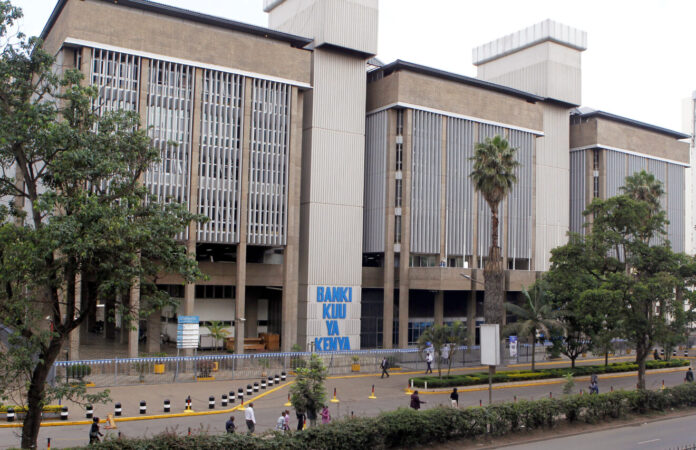
The High Court gave Moi University 30 days to present a clear repayment plan, failure of which its 69 bank accounts would be attached. The university failed to comply, and Justice Wananda ordered the freezing of more than 10 critical accounts spread across National Bank of Kenya, Kenya Commercial Bank, Co-operative Bank, Access Bank, Equity Bank, and Absa Bank.

In an internal memo dated April 15, the university warned: “The University is facing serious financial constraints coupled with the garnishee order that is in place… the possibility of having it closed down is high.” 

A University Drowning in Debt

The Vishva crisis is just one chapter in a much longer story of financial mismanagement. Student numbers have plummeted from 48,000 in 2015 to just 21,000 today, slashing the university’s revenue. The institution is also grappling with a Sh3 billion loan tied to the revival of Rivatex, ghost workers on the payroll, and rising salary costs from unfunded collective bargaining agreements. 
Students are currently nearing end-of-semester exams and preparing for field attachments, with the account freeze threatening to disrupt academic schedules already under pressure from lecturers’ strikes in late 2024 and 2025. 

A Last-Minute Lifeline?

In a last-ditch attempt to avert full closure, the university has proposed a 60-day postponement of the court ruling and an immediate down payment of Sh50 million from the frozen accounts. If the court approves, the matter will be revisited on June 16, 2026. 

The government wired Sh500 million in emergency funding to the institution in January 2025 to ease its cash crunch  — but clearly, that was not enough. With total debt now reportedly exceeding Sh10 billion, the question is no longer whether Moi University is in crisis. The question is whether it can survive it.​​​​​​​​​​​​​​​​

Janet Mbugua Parts Ways with Nation Media Group After One Year

0

Veteran media personality Janet Mbugua has officially stepped down from Nation Media Group, ending her run on the popular morning programme Fixing the Nation after just over a year on the show.

Mbugua made the announcement during her final segment on April 17, 2026, where she had been co-hosting alongside Eric Latiff and Mariam Bishar.

Reflecting on her decision to join the show, Mbugua said the opportunity felt like a natural extension of her public advocacy work. The role, she explained, came at a time when she had already been deeply engaged in national conversations and saw the platform as a way to amplify that voice on a mainstream stage.

During her time on the programme, Mbugua brought her trademark passion for civic engagement and social issues to the morning show, staying true to the active citizen identity she has cultivated throughout her career.

While the full details surrounding her departure have not been disclosed, her exit marks the end of a chapter that saw one of Kenya’s most recognizable media figures return to the screen in a bold and purpose-driven way.

Fans and colleagues have begun reacting to the news, with many taking to social media to celebrate her contribution to the show and wish her well in her next chapter.​​​​​​​​​​​​​​​​

ODM Suspends Coalition Talks with Ruto’s UDA Amid Growing Tensions

0

Kenya’s Orange Democratic Movement (ODM) has hit the brakes on coalition negotiations with President William Ruto’s United Democratic Alliance (UDA), in a dramatic escalation of tensions within the broad-based government.

The decision came out of a nearly seven-hour Central Management Committee meeting chaired by party leader Oburu Oginga. Sources described the session as tense and highly charged, with senior officials openly voicing frustration over what they characterized as a deliberate and coordinated effort to weaken the party from within.

Rather than pushing forward with coalition talks ahead of the 2027 general elections, ODM resolved to turn its focus inward — strengthening and popularizing the party before entering any new political arrangements.

As a further show of displeasure, the party also directed its members to halt all campaigning in support of President Ruto’s re-election bid until their grievances are formally addressed.

To help find a way forward, Dr. Oginga, co-deputy party leader Simba Arati, and National Chairman Gladys Wanga were tasked with convening an urgent meeting with President Ruto to resolve the outstanding issues.

A top official who attended the meeting made the party’s position unmistakably clear: ODM would not engage with those it felt showed no respect for the party or its leadership.

The fallout signals a significant crack in the broad-based government arrangement, raising questions about the stability of the Ruto-Raila political alliance as the country edges closer to the 2027 election cycle.​​​​​​​​​​​​​​​​

Ekitike Ruled Out for Season and World Cup After Suffering Ruptured Achilles

0

Liverpool forward faces months on the sidelines after horror injury in Champions League clash against PSG

Liverpool have been dealt a major blow after confirming that forward Hugo Ekitike has suffered a ruptured Achilles tendon — an injury that will end his season prematurely and, more devastatingly, rule him out of this summer’s World Cup with France.

The 23-year-old had to be substituted during the first half of Tuesday’s Champions League match against Paris Saint-Germain at Anfield after a slip on the turf, with subsequent scans confirming the rupture. 

The timing could hardly be worse for the young Frenchman, who had been enjoying a breakthrough campaign at club level.

A ruptured Achilles is one of football’s most feared injuries, typically requiring six to nine months of rehabilitation — meaning Ekitike faces a long and gruelling road back to fitness.
He will be sidelined for the remaining weeks of the club season and will be unable to participate at this summer’s World Cup with France.  Missing a World Cup at the peak of his powers is a bitter pill to swallow for a player who had been firmly on the international radar.

There is also a poignant added dimension to the fixture in which he was injured. Ekitike suffered the blow against his former club PSG — the side where he first made his name in Ligue 1 before making his move to Merseyside — making the evening all the more painful.

Liverpool FC confirmed that Ekitike will receive the full support of everyone at the club, with further updates to be provided at the appropriate time. 

For Liverpool, the injury is a significant setback in the business end of a season in which they remain in contention on multiple fronts. The club will now be forced to manage their attacking resources carefully as they push for honours in the final weeks of the campaign.

All eyes will be on Ekitike’s recovery as one of European football’s brightest young talents faces the toughest test of his career — not on the pitch, but in the treatment room.​​​​​​​​​​​​​​​​

Julius Malema Sentenced to Five Years in Prison Over Firearm Discharge

0

EFF leader’s political future hangs in the balance as lawyers immediately file for appeal

South Africa’s firebrand opposition leader Julius Malema has been handed a five-year direct imprisonment sentence, in a ruling that could dramatically reshape the country’s political landscape.

The Economic Freedom Fighters leader was sentenced at the East London Regional Court in his firearm handling and discharge case, after appearing for a second day of highly publicised sentencing proceedings. 

Malema, 45, was convicted last year on fiveJulius Malema Sentenced to Five Years in Prison Over Firearm Discharge charges, including unlawful possession of a firearm and discharging a weapon in a public place, stemming from a 2018 incident at a stadium in the Eastern Cape province where he fired a rifle into the air at a rally. 

Handing down the sentence in a packed courtroom, Magistrate Twanet Olivier said the court had taken sufficient time to consider what was presented by the defence, weighing factors including the seriousness of the offence while also noting that Malema was a first-time offender with no outstanding charges. 

In addition to the five-year direct imprisonment term, Malema also received an additional two years and a R20,000 fine. 

Malema’s lawyers applied for leave to appeal the magistrate’s decision within minutes of it being read out in court.  His senior counsel had argued strongly against a custodial sentence, contending that a fine would be a more appropriate penalty and that “each case must be evaluated on its facts.” 

The ruling carries enormous political consequences. If confirmed after all appeals, the sentence would bar Malema from serving as a lawmaker — a major setback for his far-left Economic Freedom Fighters party, which has strong support among young South Africans frustrated by the racial inequality that has persisted since the end of white minority rule in 1994. 

The case has gripped South Africa for years. Since the matter was enrolled four years ago, the prosecution meticulously presented its evidence by calling 19 witnesses to prove its case beyond reasonable doubt. 

Malema remains one of South Africa’s most polarising figures — a vocal champion of land expropriation and economic transformation who built his career on challenging the ruling African National Congress. Today’s sentence marks a stunning turn in a career defined by confrontation, and the legal battle is far from over.

This is a developing story. Appeals are underway.

Parliament Backs Bill to Formally Recognise and Fund Informal Schools

0

Millions of learners in APBET institutions stand to benefit from proposed legislation

Kenya’s lawmakers have thrown their weight behind a Bill that seeks to bring Alternative Provision of Basic Education and Training (APBET) schools into the formal education fold, a move that could transform the learning prospects of millions of children currently left out of government support.

The Basic Education (Amendment) Bill, 2025, sponsored by Mathare Member of Parliament Anthony Oluoch, proposes integrating informal learning institutions into the mainstream education system to enable them access government funding, infrastructure support and learning materials.

APBET schools — which include non-formal education centres, adult learning institutions, mobile schools and night schools — operate largely in informal settlements across the country. Despite serving some of the most vulnerable learners, they remain unrecognised under the Basic Education Act, 2013, which classifies schools as either public or private only. This legal gap has left learners in these institutions without National Education Management Information System (Nemis) registration, effectively locking them out of government capitation and examination registration.

MP Oluoch told the House that approximately three million children currently fall outside the formal education system. Lawmakers supporting the Bill argued that the continued failure to recognise these institutions undermines the constitutional right to education and abandons vulnerable learners without recourse.
Deputy Speaker Gladys Boss lent her voice to the proposal, noting that it would complement national efforts to achieve universal access to education. She acknowledged the reality that many children attend informal schools due to limited access to formal institutions.
Ruaraka MP Tom Kajwang’ raised concerns about the long-term consequences of the status quo, warning that lack of recognition directly affects learners’ ability to progress to higher education.
Beyond recognition and funding, the Bill also proposes representation of APBET schools on the National Education Board and would require county directors of education to maintain up-to-date data on the institutions — a step seen as crucial to planning and accountability.
If passed, the legislation would mark a significant shift in Kenya’s approach to inclusive education, ensuring that geography and socioeconomic circumstance no longer determine a child’s access to quality learning.

Kenya Slashes Fuel Prices as Treasury Cuts VAT on Petroleum Products

0

Petrol drops by Sh9.37, diesel by Sh10.21 effective April 16 after government intervention

Kenyans will pay less at the pump starting Thursday after the Energy and Petroleum Regulatory Authority (EPRA) revised fuel prices downward following a government decision to reduce Value Added Tax on petroleum products.

The price cuts follow President William Ruto’s directive to lower VAT from 13% to 8%, coming on the heels of a sharp fuel price hike in the April 2026 pump price review. 

As a result, the pump price per litre in Nairobi for super petrol and diesel has decreased by Sh9.37 and Sh10.21 respectively, while kerosene remains unchanged. 

In Nairobi, motorists will now pay Sh197.60 per litre of super petrol and Sh196.63 for diesel. In Mombasa, pump prices will stand at Sh194.32 for super petrol and Sh193.35 for diesel, maintaining relatively lower rates compared to inland towns due to proximity to the port. In Kisumu, petrol will retail at Sh197.48 per litre, with diesel at Sh196.85, while in Nakuru, super petrol will go for Sh196.66 per litre and diesel at Sh196.04.

Acting EPRA Director General Dr. Joseph Oketch said the new maximum retail pump prices will be in force from April 16 to May 14, 2026.

The revision comes barely 24 hours after a controversial price hike rattled consumers.

On April 14, EPRA significantly raised super petrol and diesel prices by Ksh28.69 and Ksh40.30 per litre respectively, pushing petrol in Nairobi to Ksh206.97 per litre and diesel to Ksh206.84.  The steep increases triggered widespread anger on Kenyan social media, with users flooding EPRA’s comment sections and some warning of potential political repercussions in the 2027 elections. 

Although kerosene retail prices remain unchanged at Sh152.78, the level of subsidy on the product has been reduced from Sh108.10 per litre to Sh96.56 per litre. 

EPRA noted that Kenya imports all its petroleum products in refined form, with prices determined by international market benchmarks and the prevailing exchange rate of the shilling against the US dollar. 
“EPRA wishes to assure the public of its continued commitment to the observance of fair competition and the protection of the interests of both consumers and investors in the energy and petroleum sectors,” the regulator stated.

Prices are effective midnight April 16, 2026, and run through May 14, 2026.

Kenya gives 13,000 cooperatives 21 days to comply or lose licences

0
Kenya gives 13,000 cooperatives 21 days to comply or lose licences

Only 2,700 of the country’s registered Saccos have filed required returns. Cabinet Secretary Oparanya has warned the rest face deregistration under sweeping new reforms.

The Kenyan government has issued a firm ultimatum to the country’s cooperative sector: comply with financial accountability requirements within 21 days or face licence revocation. The warning, delivered by Cooperatives Cabinet Secretary Wycliffe Oparanya, targets the vast majority of the country’s 13,000 registered Savings and Credit Cooperative Organisations (Saccos) that have failed to submit mandatory financial returns.

Oparanya made the announcement in Kakamega following a coordination meeting that convened teams from five Western counties to align strategies around coffee farming implementation — a sector that relies heavily on a well-functioning cooperative movement.

“Out of the 13,000 cooperatives, only 2,700 have responded and we are going to give them another 21 days to comply, failure to which we are going to cancel their licenses so that they are either inactive, dormant or they are not operating at all,” the CS said.

He emphasised that financial statements are among the most critical components of the required returns. “When you make returns, one of the most important documents is the financial statement to show how the Saccos have been operating — and this is where the problem lies,” he added.

Beyond the compliance deadline, the ministry is pushing through a broader reform agenda aimed at professionalising the sector. Among the most significant proposed changes is a new minimum membership threshold: any cooperative seeking registration must have at least 1,000 members, up dramatically from the previous requirement that allowed as few as ten individuals to form a Sacco.

A minimum share capital of Sh10 million will also be required under the new framework. Oparanya said new registrations have been frozen pending the implementation of recommendations from an expert committee he commissioned last year.

“Before, even 10 people could come up and form a Sacco. As of now we have stopped the registration of Saccos until the recommendations we have received from the committee of experts that I formed last year are implemented through the National Assembly,” he said.

Lawmakers present at the meeting welcomed the reforms. Ikolomani MP Bernard Shinali, who chairs the National Assembly Committee on Trade, Industry and Cooperatives, noted that several pieces of cooperative legislation are currently before the House and could soon be enacted into law.

“We are happy with some of the proposed laws by the Ministry to streamline the Cooperatives Movement, where the security of the shares of contributors are going to be secured,” Shinali said.

Likuyani MP Innocent Mugabe framed the reforms as part of a broader economic transformation for the region, pointing to the government’s push to diversify Western Kenya’s agricultural base beyond maize and sugarcane into coffee farming.

“This is an economic revolution for our people. With the efforts to support and revive the coffee sector by streamlining the cooperatives, our people are going to venture into coffee farming that is going to change their fortunes and boost the economy of this region,” Mugabe said.

The reform push comes as the government looks to restore confidence in a cooperative sector long plagued by poor governance and lack of transparency, with thousands of Saccos operating with little financial oversight despite holding the savings of millions of Kenyans.

Oil Markets Whipsaw as US-Iran Conflict Descends Into a War of Words and Wildly Shifting Narratives

0
Oil Markets Whipsaw as US-Iran Conflict Descends Into a War of Words and Wildly Shifting Narratives

Global oil markets have been thrown into turmoil by a dizzying sequence of threats, denials, and diplomatic contradictions between Washington and Tehran, leaving traders, analysts, and even seasoned policymakers struggling to chart a clear course through one of the most volatile geopolitical standoffs in recent memory.

The chaos reached a peak last week when US President Donald Trump threatened to destroy Iran’s energy infrastructure unless it reopened the Strait of Hormuz, the narrow waterway through which roughly a fifth of the world’s oil supply passes. Tehran responded in kind, warning that any such escalation would see it ignite oil and gas wells across the Middle East — a scenario that analysts described as potentially catastrophic for global energy markets.

The exchange sent Brent crude surging to $113 a barrel on Monday as Trump’s deadline loomed. Then, in a dramatic reversal, the president pivoted to describing “very good and productive talks” with Tehran — a claim Iran’s military spokesman swiftly dismissed, saying the US was “negotiating with itself.” Oil prices plunged on the news of potential dialogue, with US crude touching as low as $84 a barrel before settling around $95 by Wednesday — a swing of nearly 30 dollars in the space of days.

Fake News and Financial Manipulation

Iran has been unequivocal in its rejection of any suggestion that peace talks are under way. Mohammad Bagher Ghalibaf, the speaker of Iran’s parliament, went further, alleging a deliberate disinformation campaign designed to move markets.

“Fake news is used to manipulate the financial and oil markets and escape the quagmire in which the US and Israel are trapped,” Ghalibaf said, as officials in Tehran vehemently denied reports — carried by US media outlets — that contacts had been established between the two countries via Pakistan.

The Boy Who Cried Peace

The episode is not without precedent. Writing in the Financial Times, markets commentator Robert Armstrong noted that this is not the first time Trump has played what he called “the boy who cried peace.” Two weeks prior, jittery markets calmed after the president declared the conflict was “very complete, pretty much” — only for hostilities to continue regardless.

Armstrong argued, however, that Trump’s peace signals, even if untethered from reality, do serve a purpose. They function as a “signal of intent” — evidence that the president is “really looking for an exit” from a conflict that has grown far more complicated than initially anticipated.

Weaponised Uncertainty

For market participants, the deeper problem is structural. Writing in The Telegraph, Tom Stevenson described Trump’s approach as “weaponised uncertainty” — a governing style so unpredictable that meaningful forecasting has become almost impossible.

Ask analysts what the consequences of a prolonged Hormuz closure would be, Stevenson noted, and the honest answer is that it “depends how long it goes on for” — a determination that ultimately comes down to “which side of the bed the president gets out of.” In a rare moment of candour for a market commentator, Stevenson concluded that the one thing he could say with complete confidence was “I don’t know — and nor does anyone else.”

That sentiment appears to extend to the White House itself. Andreas Kluth, writing on Bloomberg, observed that even the administration seems uncertain about its own next move. Internet commentators have taken to dubbing Trump “Don Tzu” — a pointed and unflattering contrast to Sun Tzu, the ancient Chinese military strategist and author of The Art of War — suggesting that a conflict conceived as a swift Venezuela-style operation to force regime change has slipped badly out of control.

Two Paths, No Clear Map

Analysts broadly agree that the US now faces two stark options. It can continue to escalate — bombing energy infrastructure and deploying ground forces — or it can pursue a “frozen conflict” framework that allows both sides to declare a version of victory and step back from the brink. Neither path is clean, and neither is certain.

The irony, as Kluth noted, is that Trump would have done well to heed the very strategist his critics compare him to. Sun Tzu wrote in The Art of War that “he who is destined to defeat first fights, and afterwards looks for victory” — a warning against rushing into conflict without a clear endgame that now reads as almost prophetic.

Market Outlook

For now, energy markets remain on edge. Brent crude’s extraordinary volatility — nearly $30 in price movement within a single week — has underscored just how exposed global supply chains are to the whims of a conflict with no clear resolution in sight. Traders are caught between fear of a supply shock and hope of a diplomatic off-ramp, with neither prospect reliable enough to bet heavily on.

Until the gap between Washington’s claims and Tehran’s denials narrows, or until one side blinks decisively, markets are likely to keep swinging — hostage, as Vivian Salama and Jonathan Lemire wrote in The Atlantic, to a conflict in which neither side has full control “over the conflict — or its narrative.”

Kenya Airways Posts Sh17.1 Billion Loss But Insists Operations Remain Stable

0
Kenya Airways Posts Sh17.1 Billion Loss But Insists Operations Remain Stable

Kenya Airways has moved to calm public concern following the release of its full-year 2025 financial results, assuring customers that flights continue to operate as scheduled despite posting a net loss of Sh17.1 billion.

The result marks a sharp reversal from the Sh5.4 billion profit recorded in 2024, which had briefly raised hopes of a sustained financial turnaround for the national carrier. Total income also declined to Sh161.5 billion from Sh188.5 billion the previous year, reflecting what the airline described as a difficult operating environment.

In a Customer Update statement dated March 30, 2026, the airline sought to contain anxiety triggered by the figures.

“We wish to reassure our customers, partners, and the public that our operations remain normal, with flights operating as per schedule across our network,” KQ said, adding that all valid tickets remain fully honoured.

Passenger performance took a significant hit during the period. Revenue passenger kilometres fell by 18 per cent, passenger numbers dropped from 5.2 million to 4.6 million, and cargo volumes declined by eight per cent.

The airline pinned much of the blame on operational constraints, chiefly the temporary grounding of three Boeing 787-8 Dreamliner aircraft, which represented a third of its wide-body fleet. Engine availability issues and global spare parts supply chain disruptions further compounded the challenges.

Despite the turbulence, Kenya Airways pointed to its history of weathering adversity, citing its ability to navigate COVID-19, security incidents, health crises, and geopolitical disruptions.

“We have continued to be a beacon of resilience,” the airline said, also noting continued backing from the Government of Kenya, which regards the carrier as a strategic national asset.

The latest loss adds to a troubling long-term financial picture. Kenya Airways has now recorded net losses in 13 of the past 16 years, with cumulative losses since 2010 exceeding Sh200 billion, equivalent to approximately $1.54 billion.

Looking ahead, the airline outlined a recovery strategy centred on raising capital to address aircraft and engine constraints, cutting costs, stabilising operations, and growing cargo capacity.

“Customers can continue to book and travel with confidence,” KQ said, as it works to steady the ship and restore the financial momentum briefly glimpsed in 2024.