
Home Blog Page 2

Drama as Nairobi Central OCS Arrested Over Release of Protest Suspects

0
Nairobi Central OCS arrested

There was dramatic turn of events within the police service after the Officer Commanding Station (OCS) at Nairobi’s Central Police Station was arrested over the alleged unlawful release of dozens of suspects linked to recent anti-fuel price protests.

The senior police officer, a Chief Inspector attached to the station, was arrested on Monday by fellow officers acting on instructions from senior police commanders. He was later detained at Lang’ata Police Station as investigations into the incident commenced.

According to police authorities, the officer is under investigation for allegedly abusing his office after reportedly releasing 64 suspects without lawful authority on May 18. The suspects had been arrested during demonstrations over the rising cost of fuel and were facing public order-related offences.

Nairobi Police Commander Issa Mohamud confirmed the arrest, stating that the officer is accused of improperly using his authority to confer an unlawful benefit through the release of the detainees.

“We are handling the matter internally before we decide the way forward,” Mohamud said.

Under police regulations, OCSs have the authority to release suspects from custody under certain circumstances. However, investigators are now seeking to establish whether proper procedures were followed in this particular case.

The protests, which erupted in several parts of the country, resulted in widespread chaos, arrests, injuries, and destruction of property. Police reported that nearly 1,000 people were arrested nationwide, with more than 200 arrests made in Nairobi alone.

Authorities further stated that at least four people lost their lives while over 30 others sustained injuries during the unrest. Several vehicles were burnt, businesses vandalised, and property looted in different areas affected by the demonstrations.

Public transport operations were also disrupted as some operators withdrew services amid fears of insecurity and continued protests.

Meanwhile, Interior Cabinet Secretary Kipchumba Murkomen accused politicians of infiltrating the demonstrations and sponsoring criminal activities under the guise of peaceful protests. Speaking in Nairobi, Murkomen claimed that criminal gangs had been mobilised to loot businesses, attack government projects, and intimidate supporters of the Kenya Kwanza administration.

The CS maintained that while the government respects the constitutional right to protest, acts of violence, looting, and destruction of property would not be tolerated.

“Looting, violence, blocking roads, and vandalising public and private property can in no way bring down the prices,” Murkomen said.

He linked the increase in fuel prices to the global energy crisis caused by ongoing tensions involving the United States, Israel, and Iran, particularly disruptions affecting the Strait of Hormuz, which has significantly raised global shipping and insurance costs.

Murkomen also alleged that some opposition politicians were using inflammatory statements to incite violence and ethnic intolerance. He cited incidents including the burning of a UDA office in Wote, looting of businesses linked to pro-government leaders, and attacks on infrastructure projects as signs of organised political sabotage.

Additionally, the Interior CS referenced the death of gospel musician Rachel Wandeto, who reportedly succumbed to injuries sustained during the chaos, warning that those behind violence and destruction would face legal consequences.

“It is quite unfortunate that there are politicians in this country who measure the success of opposition to the government by the number of innocent lives lost,” he said.

Investigations into both the protests and the alleged unlawful release of suspects remain ongoing.

Matatu Operators Announce Nationwide Strike, 50% Fare Hike Over Fuel Price Surge

0
Matatu Operators Announce Nationwide Strike, 50% Fare Hike Over Fuel Price Surge

Kenyans who rely on public transport are bracing for significant disruption after matatu operators announced a nationwide strike set to begin on Monday, coupled with an immediate 50 per cent increase in fares, citing the government’s latest upward revision of fuel prices as the final breaking point for an already strained industry.

Industry at Breaking Point

The Matatu Owners Association, led by chairman Albert Karakacha, said the sector had been pushed to the edge by relentlessly rising operational costs and broken government promises, leaving operators with no choice but to take drastic action.

“On Monday, there will be strictly no movement of any vehicles; all the roads will be blocked until the government listens to our cry because we have been promised, but everything we are promised has not come to fulfilment,” Karakacha said in a strongly worded statement.

The association further directed all public transport investors and transport network companies across the country to immediately implement the 50 per cent fare adjustment, arguing it was the only viable way to sustain operations in the wake of the fuel price surge.

“All transport network companies, wherever they are, be aware that we are going to increase our prices by 50% because we don’t have the mechanism,” they warned.

What Triggered the Crisis

The announcement came just hours after the Energy and Petroleum Regulatory Authority (EPRA) released its latest monthly fuel pricing review, revealing sharp increases in the cost of key petroleum products.

Diesel — the primary fuel powering most public service vehicles — rose by a steep Sh46.29 per litre, while super petrol increased by Sh16.65 per litre. In Nairobi, petrol and diesel now retail at Sh214.25 and Sh242.92 per litre respectively. Kerosene prices were left unchanged for the review period covering May 15 to June 14, 2026.

EPRA attributed the adjustments to shifts in global oil markets and the rising cost of imported refined petroleum products, factors largely beyond Kenya’s immediate control.

Government’s Sh5 Billion Cushion Falls Short

Energy Cabinet Secretary Opiyo Wandayi had earlier defended the government’s position, revealing that approximately Sh5 billion from the Petroleum Development Levy (PDL) Fund had been deployed to cushion consumers against even steeper price increases.

“To mitigate the impact of rising global petroleum prices on consumers and the wider economy, the government has utilised the Petroleum Development Levy stabilisation mechanism to cushion the prices of Diesel and Kerosene during this review period,” Wandayi said.

He attributed the price pressures to a combination of rising crude oil prices, elevated freight costs, and ongoing geopolitical tensions in the Middle East. Despite the government’s intervention, the matatu industry argues the cushioning measures have not gone far enough to shield operators from the real cost of running vehicles on Kenyan roads.

Ripple Effects Across the Economy

The standoff arrives at a deeply sensitive moment for ordinary Kenyans. Fuel prices in Kenya have a cascading effect across the entire economy — influencing transport costs, electricity generation, food prices, and the broader cost of goods and services. A 50 per cent jump in matatu fares would hit millions of commuters who depend on public transport daily to get to work, school, and business.

If the strike proceeds as announced on Monday, major towns and cities across Kenya could face paralysis, with ripple effects felt well beyond the transport sector.

What Happens Next

As of Friday, the government had not publicly responded to the operators’ ultimatum. With the strike deadline hours away, pressure is mounting on authorities to engage the matatu industry before Monday morning commuters are left stranded on roadsides across the country.

EPRA maintains that its pricing model is designed to recover importation costs while shielding consumers from excessive market volatility — a position the matatu industry has firmly rejected as insufficient.

Uhuru Kenyatta Sends Sh500,000, Condolences to Senator Onyonka at Mother’s Burial

0
Uhuru Kenyatta Sends Sh500,000, Condolences to Senator Onyonka at Mother's Burial

Retired President Uhuru Kenyatta sent a heartfelt condolence message and a Sh500,000 donation to Senator Richard Onyonka during the burial of his mother, Mama Teresa Nyaboki Omoke, held on Friday in Kisii County.

Jubilee deputy party leader Fred Matiang’i represented the former President at the ceremony, personally delivering both the message and the financial contribution on his behalf.

Uhuru Kenyatta Sends Sh500,000, Condolences to Senator Onyonka at Mother's Burial
Uhuru Kenyatta Sends Sh500,000, Condolences to Senator Onyonka at Mother’s Burial

Matiang’i Delivers Personal Message

Addressing mourners gathered for the burial, Matiang’i said he had been dispatched directly by the retired Head of State to stand with the Onyonka family during their time of grief.

“I have been sent by former President Uhuru Kenyatta with a message of condolence and support to Senator Richard Onyonka and the entire family during this difficult moment,” Matiang’i told the gathering.

The Sh500,000 donation, handed over during the ceremony to support funeral arrangements, drew warm applause from mourners in attendance.

Uhuru: Losing a Parent is Life’s Most Painful Experience

In his condolence message, Uhuru described the loss of a parent as one of the most profound and painful experiences any person can endure.

“It is with sadness that my family and I send this message of condolence, comfort, support and encouragement to you following the death of your beloved mother, Mama Teresa Nyaboki Omoke,” the message read.

The former President praised the late Mama Teresa as a woman who had lived a full and impactful life, devoted entirely to her family and the community around her. He encouraged the family to draw comfort from the legacy she left behind.

“We join you as you celebrate together with your families a life well lived and thank God for the treasured, precious gift of Mama Teresia. She loved and cared for her family dearly,” Uhuru’s message stated.

A Tribute to Dr. Zachary Onyonka

Beyond mourning Mama Teresa, Uhuru also took the opportunity to honour the memory of Senator Onyonka’s late father, Dr. Zachary Onyonka, who served in government for nearly three decades alongside Kenya’s founding President, Jomo Kenyatta.

“Your father, the late Dr Zakary Onyonka, served selflessly with diligence and commitment to the nation and people of Kenya, together with my father, the late President Mzee Jomo Kenyatta,” the message noted, adding that Dr. Onyonka had served with integrity across various ministries from 1969 to 1996.

The former President expressed his confidence that Senator Onyonka and his family would honour and carry forward the values and legacy of service modelled by both parents.

A Prayer for the Grieving Family

Uhuru closed his message with a prayer for strength and divine comfort for the Onyonka family as they navigated their grief.

“As you pay your last respects and honour Mama Teresa Nyaboki Omoke, who God has now called home to rest, we pray that the love of God will console, comfort and strengthen you throughout this period and the days to come,” the message read.

“May the Almighty God rest her soul in eternal peace.”

Senior Leaders Attend

The burial ceremony drew a cross-section of senior political figures from across the political divide, including Wiper Democratic Movement leader Kalonzo Musyoka, ODM Secretary General Edwin Sifuna, and Embakasi East MP Babu Owino, underlining the wide respect held for the Onyonka family in Kenya’s political circles.

Long-Distance Bus Companies Increase Fares Following EPRA Fuel Price Review

0
Long-Distance Bus Companies Increase Fares Following EPRA Fuel Price Review

Kenyans travelling upcountry are set to face higher transport costs after several long-distance bus companies announced fare increases following the latest fuel price review by the Energy and Petroleum Regulatory Authority (EPRA).

The adjustments come just days after EPRA raised the prices of super petrol and diesel, significantly increasing operational costs for transport operators across the country.

According to EPRA’s latest review, diesel prices recorded one of the sharpest increases, a move that has directly affected the public transport sector, especially long-distance buses that heavily rely on diesel-powered fleets. The increase pushed many operators to revise ticket prices almost immediately in order to sustain operations and maintain service delivery.

Several major bus companies, including ENA Coach and Easy Coach, have already implemented new fare structures on key routes connecting Nairobi to various upcountry destinations. Passengers travelling to towns such as Kisumu, Eldoret, Migori, Mombasa, and other regions are now expected to pay hundreds of shillings more compared to previous rates.

Transport operators have defended the fare hikes, citing the rising cost of fuel, vehicle maintenance, and daily operational expenses. Industry players argue that without the adjustments, it would become difficult to maintain services and cover the increasing financial burden caused by the fuel price surge.

The fare increases are expected to further strain many Kenyan households already grappling with the high cost of living. Daily commuters and travellers heading upcountry for work, business, or family visits are likely to feel the impact immediately as transport expenses continue to rise across the country.

Meanwhile, stakeholders in the transport sector continue to urge the government to introduce measures that can cushion both operators and consumers from the recurring fuel price shocks. Some transport associations have called for the return of fuel subsidies or policy interventions aimed at stabilizing fuel costs and preventing further fare increases in the future.

Dr Job Obwaka Died of Cardiac Arrest, Autopsy Confirms

0

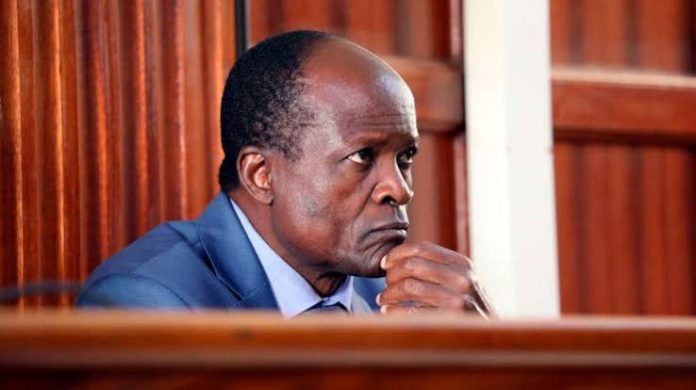
A postmortem examination conducted on Tuesday has established that Nairobi Hospital board member Dr Job Obwaka died of cardiac arrest.

Family representative Joseph Ndungu said the autopsy findings confirmed the cause of death, adding that further examinations will be carried out.

“However, a toxicology report is still being conducted to determine the exact cause,” Ndungu adding that the family is in agreement with the findings of the examination.

Dr Obwaka, a renowned gynaecologist, died at the age of 83 and was widely respected for his decades-long contribution to women’s healthcare in Kenya.

Meanwhile, the defence team welcomed the findings, saying they support their position in the case.

Dr Obwaka’s death comes weeks after he had been charged alongside others over the alleged falsification of records linked to the Kenya Hospital Association.

He had been arrested on March 14, 2026, at the NSSF Building parking area along Bishops Road and held for three nights at Muthaiga Police Station before being arraigned in court.

The family said it will provide further updates once the toxicology results are complete.

Kenya’s Betting Obsession: The Age Groups Fuelling a Gambling Crisis

0

Kenya has cemented its place as one of Africa’s most active betting markets — and the numbers tell a story that is as striking as it is sobering. A closer look at who is placing bets, and how often, reveals that gambling in Kenya is overwhelmingly a young person’s game, with consequences that are rippling across households and the broader economy.

About 40.4% of Kenyans between the ages of 18 and 45 are actively betting, according to a joint report by the Central Bank of Kenya and the Kenya National Bureau of Statistics, with the average bettor spending KES 1,845 a month.

But within that broad age band, younger Kenyans are driving the numbers far higher. At least 76% of Kenya’s young people engage in betting activities, driven by unemployment, poverty, and a lack of opportunities — with many perceiving it as a full-time job rather than entertainment.

The majority of gamblers fall in the 18 to 35-year-old age group, with males making up a high proportion at 69% compared to females at 44%.

Mobile phones have made access almost frictionless: 88% of gamblers have used their mobile device to place bets, and 55% of those do so at least once a week.

Kenya’s youth betting rates are not just a domestic concern — they are among the highest on the African continent. Kenya stands out regionally, with 82.81% of respondents in a 2024 GeoPoll survey having placed bets — leading South Africa at 73.94%, Ghana at 73.03%, Uganda at 71.43%, Tanzania at 71.13%, and Nigeria at 65.32%.

By 2025, however, the rankings showed a notable shift, with South Africa moving to the top at 83% of respondents having ever placed a bet, while Kenya slipped to second place at 79% — still among the highest on the continent.

The frequency of betting matters as much as the participation rate. Of those who gamble in Kenya, 47% are light bettors who place wagers once a month or less, while 10% bet more than once a day. (GeoPoll) Spending, however, remains modest for most: 58% of Kenyan gamblers spend less than $10 per month, though a smaller segment of high-stakes bettors spend significantly more.

Football dominates the type of betting, with 83% of bettors saying football is what they wager on most often.

A newer and more addictive format has also emerged: 19% of gamblers are now drawn to Aviator, a crash-style game with flashing graphics and a false sense of control that experts say rapidly becomes consuming.

The aggregate scale of Kenya’s gambling activity is staggering. In 2024, Kenyans bet Sh766 billion — a figure that surpassed the entire Sh656 billion national education budget. (Daily Nation) One in 10 Kenyans, or 11.2% of adults engaged in betting, view it as a reliable source of income — down from 22.7% in 2019 — while 2.6% of mobile money account holders admit to using their accounts specifically to place bets.

Authorities are now moving to rein in the industry. New regulations proposed by the Gaming Regulatory Authority of Kenya would ban betting companies from using celebrities, social media influencers, or past winners in their advertising, and would prohibit framing gambling as a path to financial success — with penalties of up to KES 20 million in fines or up to 20 years in prison.

In May 2025, the regulator also introduced strict advertising guidelines requiring pre-approval of all advertisements and prohibiting betting promotions near schools and religious sites.

Whether these measures will meaningfully dent participation rates — particularly among the young — remains to be seen. What the data makes clear is that betting in Kenya has evolved from a pastime into a deeply embedded financial behaviour, with the 18–35 age group at its core.

How a 1990 Construction Deal Left Moi University Staring at Collapse

0

What began as a routine construction contract over three decades ago has snowballed into an existential crisis for one of Kenya’s oldest universities. Moi University is now on the brink of shutdown after the High Court froze more than 10 of its bank accounts over a debt that has grown from Sh185 million to over Sh1 billion — and the institution has only itself to blame.

A Deal Gone Wrong

In November 1990, Moi University entered into a construction deal with Vishva Builders Ltd to build the Faculty of Science Complex at its main campus in Eldoret.  The contract, valued at Sh476.3 million after negotiations, seemed straightforward enough. But within months, the cracks began to show.

The university asked for works to be stopped after seven payment certificates had been issued, citing financial constraints. The contractor obliged, and construction ground to a halt in April 1991 — with the project only nine percent complete.  The parties officially wound up the contract in November 1999, with the university promising to pay once funds became available.
They never did.

25 Years of Dodging a Bill

The contractor eventually went to court, but the suit was dismissed after Vishva failed to prosecute it — only to be revived and handled by two other judges before Justice Wananda Anuro finally ruled in favour of the construction company.  The judge was scathing, describing the case as having “the proverbial nine lives” and declaring it unacceptable that a commercial dispute of such magnitude had dragged on for nearly 25 years.

The High Court delivered judgment in February 2024, ordering Moi University to pay Sh1.2 billion when interest was applied at prevailing bank rates. A year later, in February 2025, lawyer Nelson Havi — representing Vishva Builders — obtained a decree confirming the payable amount at Sh1.08 billion.

Accounts Frozen, Institution Paralysed
The High Court gave Moi University 30 days to present a clear repayment plan, failure of which its 69 bank accounts would be attached. The university failed to comply, and Justice Wananda ordered the freezing of more than 10 critical accounts spread across National Bank of Kenya, Kenya Commercial Bank, Co-operative Bank, Access Bank, Equity Bank, and Absa Bank.

In an internal memo dated April 15, the university warned: “The University is facing serious financial constraints coupled with the garnishee order that is in place… the possibility of having it closed down is high.” 

A University Drowning in Debt

The Vishva crisis is just one chapter in a much longer story of financial mismanagement. Student numbers have plummeted from 48,000 in 2015 to just 21,000 today, slashing the university’s revenue. The institution is also grappling with a Sh3 billion loan tied to the revival of Rivatex, ghost workers on the payroll, and rising salary costs from unfunded collective bargaining agreements. 
Students are currently nearing end-of-semester exams and preparing for field attachments, with the account freeze threatening to disrupt academic schedules already under pressure from lecturers’ strikes in late 2024 and 2025. 

A Last-Minute Lifeline?

In a last-ditch attempt to avert full closure, the university has proposed a 60-day postponement of the court ruling and an immediate down payment of Sh50 million from the frozen accounts. If the court approves, the matter will be revisited on June 16, 2026. 

The government wired Sh500 million in emergency funding to the institution in January 2025 to ease its cash crunch  — but clearly, that was not enough. With total debt now reportedly exceeding Sh10 billion, the question is no longer whether Moi University is in crisis. The question is whether it can survive it.​​​​​​​​​​​​​​​​

Janet Mbugua Parts Ways with Nation Media Group After One Year

0

Veteran media personality Janet Mbugua has officially stepped down from Nation Media Group, ending her run on the popular morning programme Fixing the Nation after just over a year on the show.

Mbugua made the announcement during her final segment on April 17, 2026, where she had been co-hosting alongside Eric Latiff and Mariam Bishar.

Reflecting on her decision to join the show, Mbugua said the opportunity felt like a natural extension of her public advocacy work. The role, she explained, came at a time when she had already been deeply engaged in national conversations and saw the platform as a way to amplify that voice on a mainstream stage.

During her time on the programme, Mbugua brought her trademark passion for civic engagement and social issues to the morning show, staying true to the active citizen identity she has cultivated throughout her career.

While the full details surrounding her departure have not been disclosed, her exit marks the end of a chapter that saw one of Kenya’s most recognizable media figures return to the screen in a bold and purpose-driven way.

Fans and colleagues have begun reacting to the news, with many taking to social media to celebrate her contribution to the show and wish her well in her next chapter.​​​​​​​​​​​​​​​​

ODM Suspends Coalition Talks with Ruto’s UDA Amid Growing Tensions

0

Kenya’s Orange Democratic Movement (ODM) has hit the brakes on coalition negotiations with President William Ruto’s United Democratic Alliance (UDA), in a dramatic escalation of tensions within the broad-based government.

The decision came out of a nearly seven-hour Central Management Committee meeting chaired by party leader Oburu Oginga. Sources described the session as tense and highly charged, with senior officials openly voicing frustration over what they characterized as a deliberate and coordinated effort to weaken the party from within.

Rather than pushing forward with coalition talks ahead of the 2027 general elections, ODM resolved to turn its focus inward — strengthening and popularizing the party before entering any new political arrangements.

As a further show of displeasure, the party also directed its members to halt all campaigning in support of President Ruto’s re-election bid until their grievances are formally addressed.

To help find a way forward, Dr. Oginga, co-deputy party leader Simba Arati, and National Chairman Gladys Wanga were tasked with convening an urgent meeting with President Ruto to resolve the outstanding issues.

A top official who attended the meeting made the party’s position unmistakably clear: ODM would not engage with those it felt showed no respect for the party or its leadership.

The fallout signals a significant crack in the broad-based government arrangement, raising questions about the stability of the Ruto-Raila political alliance as the country edges closer to the 2027 election cycle.​​​​​​​​​​​​​​​​

Ekitike Ruled Out for Season and World Cup After Suffering Ruptured Achilles

0

Liverpool forward faces months on the sidelines after horror injury in Champions League clash against PSG

Liverpool have been dealt a major blow after confirming that forward Hugo Ekitike has suffered a ruptured Achilles tendon — an injury that will end his season prematurely and, more devastatingly, rule him out of this summer’s World Cup with France.

The 23-year-old had to be substituted during the first half of Tuesday’s Champions League match against Paris Saint-Germain at Anfield after a slip on the turf, with subsequent scans confirming the rupture. 

The timing could hardly be worse for the young Frenchman, who had been enjoying a breakthrough campaign at club level.

A ruptured Achilles is one of football’s most feared injuries, typically requiring six to nine months of rehabilitation — meaning Ekitike faces a long and gruelling road back to fitness.
He will be sidelined for the remaining weeks of the club season and will be unable to participate at this summer’s World Cup with France.  Missing a World Cup at the peak of his powers is a bitter pill to swallow for a player who had been firmly on the international radar.

There is also a poignant added dimension to the fixture in which he was injured. Ekitike suffered the blow against his former club PSG — the side where he first made his name in Ligue 1 before making his move to Merseyside — making the evening all the more painful.

Liverpool FC confirmed that Ekitike will receive the full support of everyone at the club, with further updates to be provided at the appropriate time. 

For Liverpool, the injury is a significant setback in the business end of a season in which they remain in contention on multiple fronts. The club will now be forced to manage their attacking resources carefully as they push for honours in the final weeks of the campaign.

All eyes will be on Ekitike’s recovery as one of European football’s brightest young talents faces the toughest test of his career — not on the pitch, but in the treatment room.​​​​​​​​​​​​​​​​