
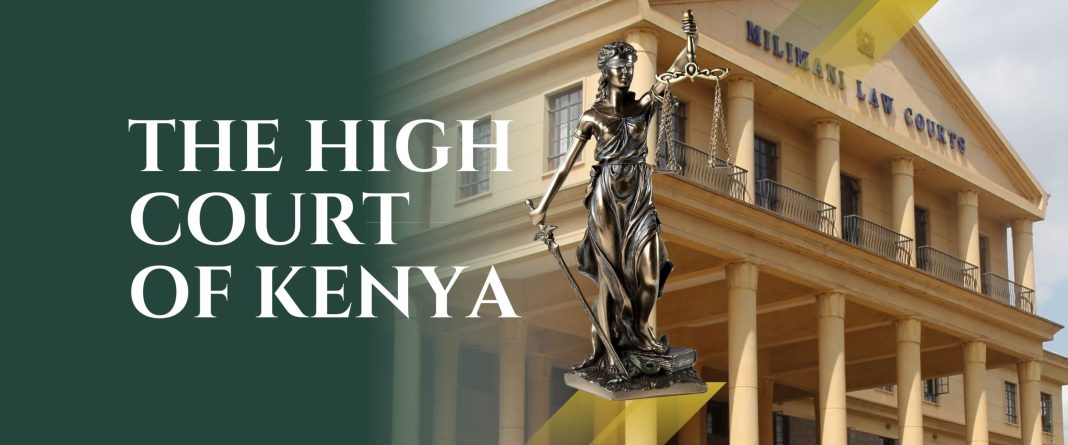

The High Court has barred law enforcement agencies from enforcing the Penal Code provision on “creating a disturbance in a manner likely to cause a breach of peace,” declaring it unconstitutional in a landmark ruling delivered on Thursday, February 12, 2026.
In the judgment, the court struck down Section 95(1)(b) of the Penal Code, effectively preventing police from arresting and charging Kenyans under the broadly framed offence. The court found the provision to be vague, overly wide, and incapable of precise interpretation.
Justice Bahati Mwamuye ruled that the section failed to meet constitutional standards, noting that it was impossible to clearly define what constitutes “creating a disturbance” likely to cause a breach of peace.
For years, the offence has been classified as a misdemeanour punishable by up to six months’ imprisonment.
Challenge by LSK
The petition challenging the provision was filed by the Law Society of Kenya, which argued that Section 95(1)(b) infringed on fundamental rights protected under Article 33 of the 2010 Constitution — particularly the right to freedom of expression.
The court agreed that the vague wording of the law left room for abuse and arbitrary arrests, undermining constitutional protections.
Morara Kebaso’s Arrest
The ruling comes months after activist Morara Kebaso was arrested on October 8, 2025, and detained at Langata Police Station. Kebaso had been monitoring government projects when he was charged with creating a disturbance likely to cause a breach of peace.
His case, which was before Justice Mwamuye on February 12, 2026, is now expected to be the last prosecution under the invalidated provision.
Curbing Over-Policing
The decision arrives amid heightened public scrutiny of police conduct. In recent weeks, viral videos circulated online showing officers allegedly assaulting peaceful citizens who were playing pool before arresting them.
By nullifying Section 95(1)(b), the High Court has significantly curtailed the scope for what critics described as “over-policing” — where individuals could be arrested in the absence of a clearly defined offence.
Legal analysts say the ruling reinforces constitutional safeguards and sets a precedent against broadly worded criminal provisions that may be used to suppress lawful expression.
The judgment marks a notable victory for civil liberties advocates and could reshape how public order offences are interpreted and enforced going forward.