
Mrima Hill in Kenya’s Kwale County has become a global hotspot for rare earth minerals, attracting U.S., Chinese, and Australian interest worth $62 billion.
Mrima Hill, located on Kenya’s southern coast in Kwale County, has emerged as a focal point in the global race for rare earth minerals—critical resources powering electric vehicles, renewable energy systems, and advanced electronics.
The site is believed to contain one of Africa’s richest deposits of rare earth elements, positioning Kenya as a potential key player in the world’s clean energy and technology supply chains.
U.S. Focus Shifts Toward Africa’s Mineral Wealth
Reports suggest that the United States has renewed its focus on Africa’s strategic mineral reserves. Under the administration of former U.S. President Donald Trump, Washington’s policy toward Africa began pivoting away from traditional trade programs like the African Growth and Opportunity Act (AGOA) and toward more transactional relationships centered on access to natural resources.
“Clearly, Trump is not interested in the African Growth and Opportunity Act (AGOA). The old regime is now extinct…the new regime is more transactional and heavily skewed towards access to minerals and commodities,” said one analyst.
The trend continues under the current administration, with U.S. Vice President JD Vance reportedly planning a visit to Kenya to strengthen cooperation around mineral exploration and supply chain diversification.
“The real issue and challenge around rare earths is the processing — and the U.S. is significantly behind in this respect. Creating that capacity is a slow process. The U.S. sees rare earths as an existential battle with China and is scouring the world to secure supplies,” the expert added.
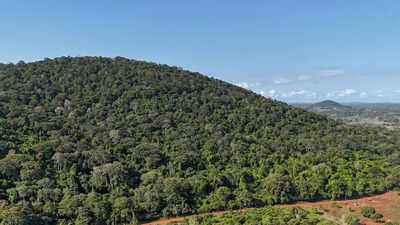
$62 Billion in Rare Earth Minerals at Mrima Hill
According to Cortec Mining Kenya, a UK and Canadian subsidiary of Pacific Wildcat, the 157-hectare forest at Mrima Hill holds mineral deposits valued at approximately US$62 billion (KSh 8 trillion).
The area’s mineral wealth includes niobium, a key ingredient in steelmaking, aeronautical engineering, and clean-tech manufacturing. These minerals are vital for producing high-performance alloys and technologies used in electric cars and renewable energy infrastructure.
Geopolitical Interest and Security Tensions
As global powers race to secure access to critical minerals, Mrima Hill has attracted growing diplomatic and commercial attention.
In June 2025, Marc Dillard, the former U.S. deputy chief of mission and chargé d’affaires, visited the site as part of Washington’s broader effort to ensure long-term access to Africa’s mineral resources.
Meanwhile, reports from the South China Morning Post indicate rising tension at the site, with Chinese nationals allegedly being turned away by local guards in recent months.
“People come here with big cars, but we turn them away,” said Juma Koja, a local security officer.
Australia Joins the Competition
Adding to the mix, an Australian mining consortium — comprising RareX and Iluka Resources — has announced new prospecting plans for Mrima Hill’s deposits. The move highlights growing international competition for Kenya’s mineral potential as countries seek to secure stable sources of rare earth elements for their industries.
Balancing Opportunity and Sustainability
Kenya now faces a crucial moment: how to harness the economic potential of its rare earth resources while ensuring sustainable development and environmental protection. With an estimated $62 billion in minerals buried beneath Mrima Hill, the stakes are high — not just for Kenya’s economy, but for the global balance of mineral supply and technological progress.
As the global scramble for rare earth minerals intensifies, Mrima Hill could soon become a defining battleground in the race for clean energy dominance and strategic resource security.