

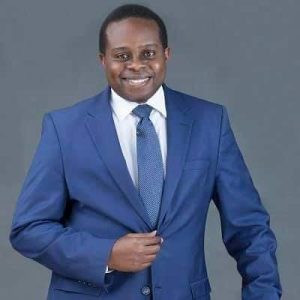
 is a distinguished Kenyan Advocate, legal scholar, and the newly elected President of the Law Society of Kenya (LSK).)
Charles Kanjama (born 17 November 1977) is a distinguished Kenyan Advocate, legal scholar, and the newly elected President of the Law Society of Kenya (LSK).
At 49 years old, he stands out as one of Kenya’s most respected legal minds, widely recognized for his balanced, incisive, and accessible legal commentary across mainstream media platforms.
Early Life and Education
Kanjama’s academic journey reflects a deep commitment to excellence and multidisciplinary expertise.
He holds a Bachelor of Laws (LL.B) (Hons) from the University of Nairobi, followed by a Postgraduate Diploma in Law from the Kenya School of Law. Currently, he is further advancing his scholarship as a Master of Laws (LL.M) student at the University of Nairobi.
His professional and academic qualifications extend beyond traditional legal training:
-
Member of the Chartered Institute of Arbitrators (MCIArb)
-
Certified Public Secretary – CPS(K)
-
Certified Public Accountant – CPA(K)
-
Higher Diploma (IMIS) – Institute for the Management of Information Systems
-
Alumnus of Strathmore School
This rare blend of law, governance, finance, and information systems expertise has shaped his reputation as an “all-rounded” legal professional.
Legal Career
Called to the Bar in 2003 after completing his articles of pupilage at Kibet & Co. Advocates, Kanjama quickly established himself in Kenya’s legal landscape.
He worked as:
-
Advocate/Associate at Ochieng’, Onyango, Kibet and Ohaga Advocates
-
Editor and Legal Manager at Law Africa Publishing Ltd
In 2006, he co-founded Muma & Kanjama Advocates (MK Advocates) alongside Andrew Muma. Today, he serves as the Managing Partner and heads the Tax and Litigation Department, leading complex constitutional, tax, commercial, and public law matters.
His legal commentary is frequently sought by Kenyan media houses, particularly during high-stakes constitutional moments such as Presidential Election Petitions before the Supreme Court of Kenya, where he often appears on expert panels dissecting legal arguments and constitutional implications.
Leadership and Governance Roles
Beyond private practice, Kanjama has played a significant role in public service and institutional governance:
-
President of the Law Society of Kenya (LSK)
-
Former LSK Council Member and Treasurer
-
Convenor, LSK Constitutional Implementation and Law Reform Committee
-
Non-Executive Director, Pacis Insurance Co. Ltd
-
Convenor, Audit Risk and Governance Committee (Pacis Insurance)
-
Board Member, National Transport and Safety Authority (NTSA), Chair of the Technical Committee
-
Vice-Chair, Kenya Christian Professionals Forum
-
Trust Administrator, Strathmore Educational Trust
His leadership style is often described as principled, analytical, and reform-driven, particularly in matters of constitutional governance and legal accountability.
Academic and Teaching Contributions
Kanjama is deeply invested in legal education. He lectures at:
-
Strathmore Business School (SBS)
-
Strathmore Law School (SLS)
His teaching portfolio includes:
-
Legal Systems
-
Criminal Law
-
Healthcare Law
-
Human Resource Law
His role as a lecturer complements his litigation and policy work, allowing him to bridge theory and practice while mentoring the next generation of Kenyan lawyers.
Publications and Scholarship
An accomplished author and editor, Kanjama has made significant contributions to Kenyan legal literature.
He has:
-
Co-authored Family Law Digest: Matrimonial Property
-
Written widely on Constitutional Law, Tax Law, and Matrimonial Property
-
Published academic papers on Legal Ethics, Media Law, and Political Governance
-
Contributed extensively to discussions on Environmental Law, Comparative Constitutional Law, and Civil Procedure
His newspaper columns and media contributions have helped demystify complex legal issues for the public, reinforcing his standing as a public intellectual in the legal sphere.
Legacy and Influence
With over eighteen years of experience, Charles Kanjama embodies a rare combination of advocate, academic, corporate leader, and public policy thinker. As LSK President, his career trajectory suggests a continued focus on constitutionalism, law reform, professional standards, and strengthening the rule of law in Kenya.
Through courtroom advocacy, boardroom governance, classroom teaching, and media engagement, he has established himself as one of Kenya’s most influential contemporary legal voices.