



A Stranger at Her Own Children’s Weddings
For twenty-four years, as Daniel arap Moi ruled Kenya with an iron fist, his ex-wife Helena — known to all as Lena — barely existed in the public eye. She watched her own children’s church weddings not from the front pew, but from a television set in her modest home in Eldama Ravine, as a stranger might. No invitation. No acknowledgement. As if she had never been.
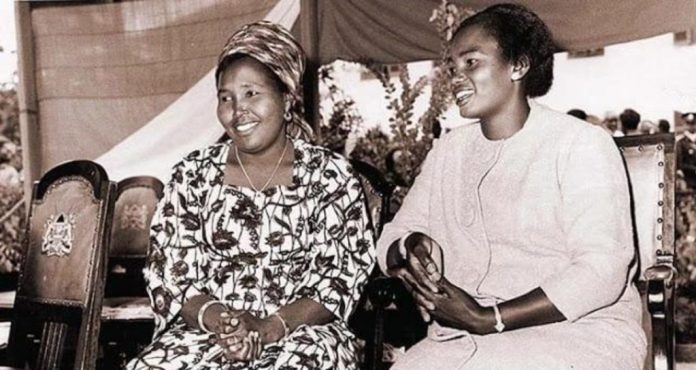
It was a remarkable erasure — all the more so because Lena Moi had once been a woman who loved public life. In the 1960s and 70s, she regularly graced official occasions, sometimes alone, sometimes on the arm of the man who would become one of Africa’s most consequential leaders. She had opinions, presence, and ambition of her own.
Then, around mid-1974, she vanished. The marriage had collapsed. By 1979 — just months after Moi was sworn in as President following the death of Jomo Kenyatta — the divorce was formalised, and Lena retreated into near-total invisibility. Security agents monitored her home. She channelled her days into church work. The woman who had helped shape a future president became, in official Kenya, nobody at all.
Two Young People, One Mission Station
To understand Lena, you have to go back to a red-earthed mission station in Eldama Ravine — and to a lanky, orphaned boy who turned up seeking shelter and an education. Daniel Toroitich arap Moi had grown up 160 kilometres away, in Sacho, Baringo. His father, Kimoi arap Chebii, had died in 1928 when Daniel was just four years old. His elder brother Tuitoek became his guardian, and in 1934 young Moi was among the herdboys recommended to attend the new Africa Inland Mission school at Kabartonjo.
The Mission had been established by Albert Barnett, an Australian who had left his homeland in 1907, convinced God was calling him to Kenya. He settled first among the Tugen near what is today Kabarnet — a town that would eventually bear a version of his name — before moving to Eldama Ravine.
The Barnett family became the lodestar around which Moi’s early life orbited. Students rose at 6am to work in the gardens and haul water. Afternoons were spent with Barnett’s Swedish wife, Elma, learning numbers. The young Moi became the mission’s Sunday school teacher, and by 1942 he was school captain, with Paul and Erik Barnett — the missionary’s sons — as his peers.
Into this world came Helena Bomett — Lena — born in 1926, daughter of Paul Bomett, a pioneering African Inland Church elder. She and her siblings William and Dina were among the earliest AIM converts; together, the group of young believers would tour local churches, singing hymns and preaching the Gospel. It was in this context — amid faith, music, and shared mission — that Moi and Lena fell in love.
A Marriage of Heifers and Hope
By the time Moi returned from Kagumo Teachers College, he had been recommended for a teaching post at Tambach through the good offices of Moses Mudavadi — father of a man who would later serve as Moi’s own vice president, Musalia Mudavadi. He was known in the community as a teacher and a preacher, dependable, devout, and rising.
In 1950, Moi married Lena in a ceremony conducted by Reverend Erik Barnett at the AIC mission in Eldama Ravine. The bride price was two heifers, one ox, and four sheep, paid to the Bomett family. His long-time friend Francis Cherogony stood as best man. Paul Barnett himself later baptised Lena and helped Moi build his first house.
Those who knew Moi in those years imagined a future for him in the church — perhaps a preacher in the mould of his Barnett mentors. But he was drawn more powerfully to teaching. Lena left her own teaching career to raise their family at Tambach Government School, where their first two children, Jennifer and Jonathan Kipkemboi, were born in 1952 and 1953. Friends who visited described a household that was warm, ordered, and deeply religious — Moi never missed a Sunday service.
“I owe her much of my success in the service of my people and my country. She has always been an encouraging factor in all aspects of my political life.”
— Daniel arap Moi, 1967
Politics Changes Everything
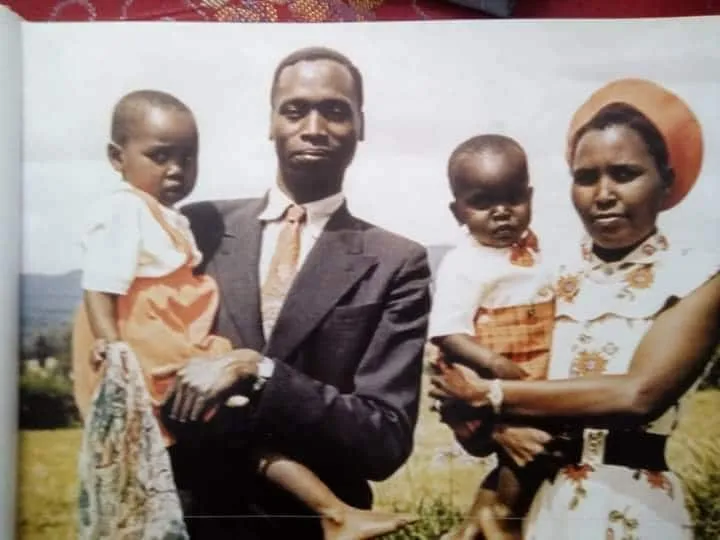
The quiet domestic life changed abruptly in 1955, when colonial authorities appointed Moi to the Legislative Council as representative for the Rift Valley, replacing an inefficient predecessor. He bought a Land Rover, opened a posho mill in south Baringo, and began crisscrossing the vast region. The family traded their school compound in Tambach for Nairobi. Suits and ties replaced shorts and long socks. The children were photographed alongside a remarkably well-groomed, handsome man — already a different figure from the mission schoolteacher.
For Lena, the elevation was not without complications. The Bomett family’s relationship with Moi was not always smooth. In 1961, her brother Eric Bomett stood against Moi as an independent candidate in the general election — a contest Moi’s KADU party won convincingly over KANU. “It was not personal. It was a matter of principle,” Eric would later say. He eventually entered Parliament as a Specially Elected Member on a KANU ticket, but the family fracture had begun.
Yet as late as 1967, a profile of Lena painted a picture of a devoted and contented woman. She told journalist Faraj Dumila that children needed to be raised by their own mothers to grow up healthy in mind and body. Dumila noted that she was equally dedicated to her husband, who ate outside the home only when necessary and valued her cooking.
Disappearance and Silence
What happened between 1967 and 1974 remains largely opaque. Moi moved out to his farm at Kabarak. Lena remained at Eldama Ravine. He raised their children without her — and when those children married, he ensured she was absent from the celebrations. No explanation was ever given publicly. No statement. No acknowledgement of any kind.
The divorce was finalised in 1979. By then, Moi was president of Kenya, one of the most powerful men in East Africa. Lena, who had been there at the very beginning — who had married him when he was a schoolteacher with a Land Rover and a posho mill — was an official non-person.
The silence endured until her death. Even then, there was a final indignity: plans had been made to bury Lena at her Eldama Ravine home. At the last minute, Moi intervened and had her interred at Kabarak — the farm she had never slept at. Even in death, she was moved without her consent to a place that was his, not hers.
A Legacy Quietly Reclaimed
History remembers Moi — for his longevity in power, his authoritarian grip, his complex legacy. It has been slower to remember Lena. Yet she was there for the formative years: the mission station education, the early faith, the humble marriage ceremony, the first children, the first political campaigns. She was the steady domestic centre around which Moi’s public ambition expanded.
That Moi himself credited her publicly — “I owe her much of my success” — makes the subsequent erasure all the more striking. The reasons remain unknown. No official account exists. What we are left with is the outline of a woman who was essential to one chapter of Kenyan history and then, as that history grew larger, was quietly written out of it.
At the African Inland Church in Eldama Ravine — where a young Helena Bomett once sang hymns and caught the eye of an orphan boy from Sacho — people still remember her. That may be the truest memorial she has.
Based on historical research into the life of Daniel arap Moi and the Bomett family of Eldama Ravine.