

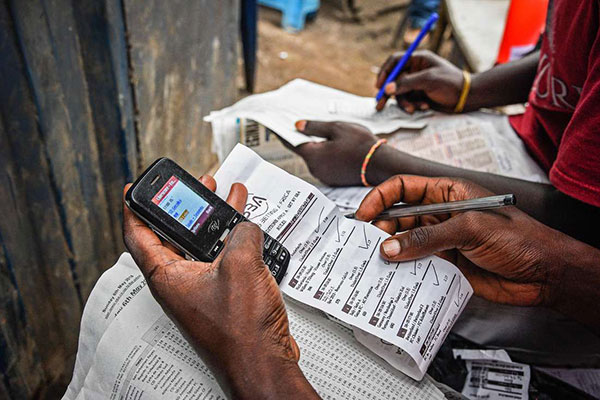


Kenya has cemented its place as one of Africa’s most active betting markets — and the numbers tell a story that is as striking as it is sobering. A closer look at who is placing bets, and how often, reveals that gambling in Kenya is overwhelmingly a young person’s game, with consequences that are rippling across households and the broader economy.
About 40.4% of Kenyans between the ages of 18 and 45 are actively betting, according to a joint report by the Central Bank of Kenya and the Kenya National Bureau of Statistics, with the average bettor spending KES 1,845 a month.
But within that broad age band, younger Kenyans are driving the numbers far higher. At least 76% of Kenya’s young people engage in betting activities, driven by unemployment, poverty, and a lack of opportunities — with many perceiving it as a full-time job rather than entertainment.
The majority of gamblers fall in the 18 to 35-year-old age group, with males making up a high proportion at 69% compared to females at 44%.
Mobile phones have made access almost frictionless: 88% of gamblers have used their mobile device to place bets, and 55% of those do so at least once a week.
Kenya’s youth betting rates are not just a domestic concern — they are among the highest on the African continent. Kenya stands out regionally, with 82.81% of respondents in a 2024 GeoPoll survey having placed bets — leading South Africa at 73.94%, Ghana at 73.03%, Uganda at 71.43%, Tanzania at 71.13%, and Nigeria at 65.32%.
By 2025, however, the rankings showed a notable shift, with South Africa moving to the top at 83% of respondents having ever placed a bet, while Kenya slipped to second place at 79% — still among the highest on the continent.
The frequency of betting matters as much as the participation rate. Of those who gamble in Kenya, 47% are light bettors who place wagers once a month or less, while 10% bet more than once a day. (GeoPoll) Spending, however, remains modest for most: 58% of Kenyan gamblers spend less than $10 per month, though a smaller segment of high-stakes bettors spend significantly more.
Football dominates the type of betting, with 83% of bettors saying football is what they wager on most often.
A newer and more addictive format has also emerged: 19% of gamblers are now drawn to Aviator, a crash-style game with flashing graphics and a false sense of control that experts say rapidly becomes consuming.
The aggregate scale of Kenya’s gambling activity is staggering. In 2024, Kenyans bet Sh766 billion — a figure that surpassed the entire Sh656 billion national education budget. (Daily Nation) One in 10 Kenyans, or 11.2% of adults engaged in betting, view it as a reliable source of income — down from 22.7% in 2019 — while 2.6% of mobile money account holders admit to using their accounts specifically to place bets.
Authorities are now moving to rein in the industry. New regulations proposed by the Gaming Regulatory Authority of Kenya would ban betting companies from using celebrities, social media influencers, or past winners in their advertising, and would prohibit framing gambling as a path to financial success — with penalties of up to KES 20 million in fines or up to 20 years in prison.
In May 2025, the regulator also introduced strict advertising guidelines requiring pre-approval of all advertisements and prohibiting betting promotions near schools and religious sites.
Whether these measures will meaningfully dent participation rates — particularly among the young — remains to be seen. What the data makes clear is that betting in Kenya has evolved from a pastime into a deeply embedded financial behaviour, with the 18–35 age group at its core.