
Nyandarua Family Appeals for Help After Son Is Abducted by Al Shabaab
A family in Kiandege village, Nyandarua County, is appealing for assistance after their son, who was allegedly abducted by the Al Shabaab militant group in Somalia, resurfaced in a viral video two years after his disappearance.
Ambrose Kimiti, a native of Leshau Pondo Ward, appeared in the video last week, pleading with the Kenyan government to intervene and secure his release.
Kimiti was employed by Iqarus, a British-based security and medical support company, and was contracted by the United Nations to work in Somalia.
According to his family, Kimiti went missing on January 10, 2024, while on a UN-related mission involving medical evaluation and rescue support in the Galgaduud region of central Somalia, an area known for Al Shabaab activity.
Reports indicate that the helicopter he was travelling in suffered mechanical failure and was forced to crash-land. Shortly after the incident, Kimiti and other crew members and passengers were allegedly taken hostage by the militant group.
His brother, Martin Mwangi, said the family had unsuccessfully sought help from various government offices since his disappearance.
“We did not know where our brother had been for the last two years until recently, when the video resurfaced. We urge the government to help rescue him,” Mwangi said.
He also called on the United Nations to take action, noting that Kimiti was working under a UN contract at the time of the incident.
“They are the employers, yet we have not seen any response from them. We also call upon Kenyans to pray for this rescue,” Mwangi added.
The family says they remain hopeful that renewed public attention will prompt swift intervention to secure Kimiti’s safe return.
UDA to Form Alliance with ODM Ahead of 2027 General Election, Ruto says
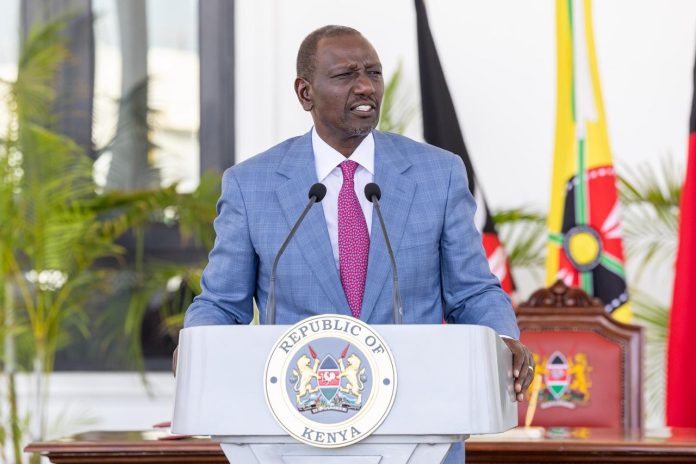
President William Ruto has hinted at the formation of a political alliance with the Orange Democratic Movement (ODM) party as part of efforts to secure his re-election in the 2027 General Election.
Speaking on Friday at Raila Odinga Stadium in Homa Bay Town, where he presided over the Genowa Governor’s Cup—an annual sports tournament organised by Homa Bay Governor Gladys Wanga—President Ruto said discussions were already underway to establish a new political alliance that would form the next government.
The President urged ODM leaders to strengthen their party to enable it to become a formidable political force, even as he reaffirmed his commitment to consolidating his United Democratic Alliance (UDA) party and the wider Kenya Kwanza coalition.
“I tell members of ODM to be ready. On our side as UDA and Kenya Kwanza, we are also ready. Let us strategise and join hands in forming a government that will make Kenya a first-world country,” Ruto said.
Ruto also took aim at his political opponents, urging them to abandon campaigns rooted in hostility and instead focus on development-oriented agendas that address the needs of ordinary Kenyans.
“I tell my opponents to tell Kenyans their agenda. Let them stop campaigning based on abstract issues which cannot add value in the lives of Kenyans,” he said.
He added that voters would not be swayed by superficial considerations, arguing that leadership should be judged on tangible development outcomes rather than appearances or rhetoric.
“Some of those who are vying for the presidency have worked in government for 40 years yet they have done nothing for Kenyans. We don’t want unnecessary side shows in the name of campaigns,” Ruto noted.
Energy Cabinet Secretary Opiyo Wandayi and ODM Secretary-General Edwin Sifuna were among ODM leaders present, alongside ODM veteran Oburu Odinga, who assured the President of the party’s commitment to cooperation within the broad-based government framework.
“As ODM, we will work in the broad-based government until 2027 to support President Ruto,” Oburu said.
Governor Gladys Wanga, however, used the occasion to criticise former President Uhuru Kenyatta, accusing him of attempting to destabilise the ODM party.
“I tell our former President to stop sending machinery to destroy ODM. We collaborated with him in the handshake government, but he never gave us the development projects the current government is delivering in our region,” Wanga said.
The remarks underscore the shifting political dynamics ahead of the 2027 polls, with signals of possible realignments that could reshape Kenya’s political landscape.
High Court Ruling Against Julius Mwale Fuels Fresh Debate Amid Havi–Judiciary Standoff
A controversial High Court decision involving US-based tycoon Julius Mwale has drawn renewed attention to the escalating public dispute between the Judiciary and former Law Society of Kenya (LSK) president Nelson Havi.
In a ruling delivered on February 27, 2025, Justice Freda Mugambi held Mwale personally liable for a Sh17 million debt arising from a commercial dispute, despite the suit having been filed against his company, Tumaz and Tumaz Limited.
The plaintiff, Sifatronix Limited, had sued Tumaz for alleged breach of contract relating to the supply of murram in 2017.
Sifatronix, a company reportedly owned by an employee of the Kenya Revenue Authority (KRA), claimed it supplied murram worth Sh17 million to Tumaz and was never paid. However, during the proceedings, Sifatronix did not produce a written contract between itself and Tumaz.
Tumaz disputed the claim, arguing that Sifatronix was a subcontractor to Epic Agencies, a firm owned by the late Dr. Fitzgerald Oketch. Dr. Oketch swore an affidavit and testified that Epic Agencies—not Sifatronix—had a direct contract with Tumaz, and that Sifatronix had no contractual relationship with Tumaz. His evidence supported an affidavit filed by Mwale.
Despite these submissions, the court ruled that both Tumaz and Mwale were liable to pay Sifatronix Sh17 million plus interest.
Tumaz subsequently lodged an appeal at the Court of Appeal in Nairobi, where the matter is awaiting hearing. As the appeal process commenced, Mwale’s legal team sought a stay of execution of the High Court orders.
High Court Ruling Against Julius Mwale Fuels Fresh Debate Amid Havi–Judiciary Standoff
Dr. Oketch died unexpectedly in October 2025, shortly before the stay application was argued. Senior Counsel Nelson Havi appeared for Mwale before Justice Alnashir Visram, who referred the application back to Justice Mugambi on December 16, 2025.
No stay was granted on that date, and the court set the matter for hearing on February 18, 2026.
On December 18, 2025, Mwale’s lawyers filed a certificate of urgency seeking a stay and offered to provide a financial guarantee pending the appeal. The following day, Justice Mugambi granted a conditional stay, giving the defendants 30 days from December 19 to deposit the guarantee.
The case took another turn when, two days later, the judge issued revised orders altering the compliance timeline. The new directions required compliance by Christmas Day, rather than within 30 days. These revised orders were issued ex parte—without the presence of the defendants’ lawyers—and just hours before Christmas, a move that has since attracted criticism.
Mwale’s appeal challenges the High Court decision on points of law, including the principle that directors of limited liability companies are generally not personally liable for company debts. Several legal commentators have suggested the appeal raises substantial legal questions and that the High Court ruling may be overturned, in whole or in part.
The dispute has unfolded against the backdrop of Senior Counsel Havi’s public campaign alleging corruption within the Judiciary. Havi has repeatedly claimed that some judges accept bribes to influence decisions—allegations the Judiciary has denied. In October 2025, Havi said he had been sanctioned by Justice Mugambi for his outspoken criticism.
Havi has previously represented Tumaz in other high-profile litigation, including a 2022 dispute with the County Government of Kakamega over the Mumias Sugar lease. In that case, Tumaz emerged as the top bidder with a Sh27 billion offer. The county government, then led by Governor Wycliffe Oparanya, sought to block the award through the courts. In October 2025, the High Court in Kakamega dismissed the county’s case and awarded costs to Tumaz, which were later assessed at Sh700 million.
As the Nairobi matter proceeds to the Court of Appeal, questions continue to be raised about the basis of the High Court’s decision—particularly the award in favor of a claimant who produced no contract, the piercing of the corporate veil to impose personal liability on a director, and the issuance of conflicting and last-minute ex parte orders.
Whether these developments are connected in any way to the broader public confrontation between Mwale’s legal team and the Judiciary remains a matter of debate.
A representative for Mwale declined to comment, citing the ongoing court proceedings.
African Union Rejects Recognition of Somaliland, Reaffirms Somalia’s Territorial Integrity
The African Union (AU) has reiterated its firm opposition to any move to recognise Somaliland as an independent state, maintaining that the region remains part of the Federal Republic of Somalia.
In a statement issued on Friday, African Union Commission (AUC) Chairperson Mahmoud Ali Youssouf said the continental body was deeply concerned by recent developments and renewed debate over Somaliland’s status. He stressed that the AU’s position is rooted in its founding legal framework and longstanding principles.
Youssouf reaffirmed that the African Union remains guided by the Constitutive Act, particularly the principle of respect for the inviolability of borders inherited at independence, as established by the 1964 decision of the Organisation of African Unity (OAU).
“The Chairperson of the Commission unequivocally reaffirms the longstanding and consistent position of the African Union,” the statement read, adding that the AU “firmly rejects any initiative or action aimed at recognising Somaliland as an independent entity.”
He emphasised that Somaliland continues to be an integral part of Somalia and warned that any attempt to alter Somalia’s internationally recognised borders would undermine the continent’s stability.
“Any effort to undermine the unity, sovereignty and territorial integrity of Somalia runs counter to the fundamental principles of the African Union and risks setting a dangerous precedent with far-reaching implications for peace and stability across the continent,” Youssouf said.
The Commission further reiterated its unwavering commitment to Somalia’s unity, sovereignty and territorial integrity, while expressing full support for the Somali government’s efforts to strengthen state institutions, consolidate peace and promote inclusive governance.
The AU’s position is consistent with decades of continental policy that has opposed the redrawing of Africa’s colonial-era borders, a stance aimed at preventing conflicts and secessionist crises across the continent.
The statement comes on the same day Israel announced that it had become the first country to formally recognise Somaliland as an independent nation. Israeli Prime Minister Benjamin Netanyahu said his government plans to immediately expand cooperation with Somaliland in agriculture, health and technology.
Somaliland President Abdirahman Mohamed Abdullahi described Israel’s decision as a “historic moment,” adding that the region would join the Abraham Accords as part of efforts to promote regional and global peace. He said Somaliland is committed to building partnerships, enhancing shared prosperity and fostering stability across the Middle East and Africa.
However, the move has drawn sharp criticism from regional and international actors. The foreign ministers of Somalia, Egypt, Turkey and Djibouti issued a joint statement condemning Israel’s decision and affirming their “total rejection” of the announcement.
Somalia’s Prime Minister Hamza Abdi Barre also weighed in, saying the country “categorically and unequivocally” rejected what he described as a deliberate violation of Somalia’s sovereignty.
Court Suspends Affordable Housing Construction at Watamu Park Over Environmental Concerns
The Environment and Land Court in Kilifi has suspended the construction of affordable housing projects at Watamu Park in Malindi following a petition raising environmental and community concerns.
In a ruling dated December 24, 2025, Justice Mwangi Njoroge of the Malindi Law Courts issued conservatory orders halting all activities at the park for 14 days, pending an inter-partes hearing scheduled for January 7, 2026.
“In the interim and having regard to the provisions of Article 70(1), (2) and (3) and the requirement of the precautionary principle under Section 3(5)(f) of the Environmental Management and Co-ordination Act CAP 387, it is hereby ordered that the status quo of Plot No. 70 Watamu as at the date of this order shall be respected and observed by all the parties for a period of 14 days from today,” Justice Njoroge ruled.
Petition Cites Lack of Public Participation
The petition was filed by environmental activist Halima Mohamed, who argued that there was no meaningful public participation in the planned destruction of Watamu Public Park to pave the way for the government’s affordable housing project.
She told the court that the park is the only remaining public green space in Watamu and its destruction would have far-reaching environmental and social consequences. The petition further alleged violations of constitutional provisions on environmental protection, public disclosure and community participation.
The case names the Attorney General, the Ministry of Lands and Housing, the Affordable Housing Board, the County Government of Kilifi and the National Environmental Management Authority (NEMA) as respondents.
Residents and Investors Raise Alarm
Residents of Watamu held peaceful protests on Tuesday, December 20, expressing concern over the proposed construction. Local investors and tourism stakeholders warned that the park plays a critical role as a tourist attraction and its loss would damage the town’s image and environmental sustainability.
They argued that the park provides vital green space and serves as a common meeting point for residents, largely due to the presence of mature neem trees. The park is also the first point of contact for many tourists visiting the area.
Residents warned that cutting down the trees and replacing the park with housing units would erode Watamu’s reputation as a tourist destination and negatively impact the local economy.
“We are not opposing the construction of affordable housing projects in Malindi. What we are asking is, please do not destroy this park. Look for an alternative,” one resident said.
While acknowledging that affordable housing is necessary to help eradicate informal settlements in the region, residents urged the government to identify alternative land for the project.
Part of a Broader Legal Trend
The ruling comes just days after a three-judge bench of the Environment and Land Court in Nairobi halted the construction of 15,000 housing units under the Southlands affordable housing project in Lang’ata constituency. That case followed a petition by Busia Senator Okiya Omtatah, who argued that the land was reserved for road and railway corridors.
A series of court cases challenging affordable housing developments has increasingly stalled the Kenya Kwanza government’s housing agenda, creating political and operational setbacks as it seeks to deliver on its promise to eradicate slums and expand access to decent housing.
The court is expected to issue further directions after hearing all parties in the Watamu Park case early next year.
Erectile Dysfunction Outbreak! Ministry of Health Warns Against Illegal Sale of Sildenafil
The Ministry of Health has issued a strong warning to pharmacies, distributors and individuals over the illegal sale of prescription-only medicines, announcing tougher enforcement measures and sanctions for those who violate the law.
In a statement, the ministry reiterated that selling or dispensing prescription medicines without a valid doctor’s prescription is illegal and will attract serious consequences. These include the seizure of products, suspension or revocation of operating licences, and possible disciplinary or criminal proceedings against offenders.
At the centre of the latest enforcement drive is sildenafil, a prescription medicine commonly used to treat erectile dysfunction. The drug works by improving blood flow and is also prescribed for certain heart and lung conditions under strict medical supervision.
Health authorities warn that misuse of sildenafil can lead to dangerous side effects, particularly among people with underlying heart conditions or those taking specific medications, which is why it is restricted to prescription-only use.
To strengthen oversight, the ministry has rolled out new supply chain monitoring systems aimed at tracking medicines from manufacturers to pharmacy shelves. From January 1, 2026, batch and lot number declarations will be mandatory for all imported, exported and locally manufactured health products, a move intended to curb illegal distribution and improve accountability.
In addition, the ministry has finalised a Track and Authentication Standard for health products. Once formally adopted, the system is expected to enhance traceability across the pharmaceutical supply chain and make it easier to detect and prevent the sale of unregulated or illegally sourced medicines.
Enforcement efforts on the ground have also intensified. The ministry is conducting targeted, risk-based inspections of wholesalers, distributors and retail pharmacies, including detailed checks on prescription records. In Nairobi, all licensed wholesalers are currently undergoing 100 per cent inspections ahead of the 2026 licensing cycle.
Practitioners found to be in breach of regulations are routinely referred to the Ethics and Disciplinary Committee, which has already handled more than ten cases. With new board members appointed in November, the committee is expected to be fully operational from January 2026, enabling faster resolution of pending cases.
Beyond inspections and sanctions, the ministry says it is investing in public awareness and professional training. Thousands of healthcare workers have already undergone compliance-focused training, while ongoing public education campaigns continue to warn Kenyans about the risks of using prescription medicines without proper medical advice.
The Ministry of Health says the crackdown is aimed at protecting public safety and ensuring that medicines such as sildenafil are used responsibly, under proper clinical guidance.
Mudavadi Explains Why Kenya Needs a Referendum Alongside 2027 General Elections
Prime Cabinet Secretary Musalia Mudavadi has outlined why Kenya must hold a referendum alongside the 2027 General Elections, warning that failure to address existing constitutional gaps could plunge the country into a major legal crisis.
Speaking during a press briefing, Mudavadi described the current period as a “constitutional moment,” saying urgent legal and structural reforms are needed to safeguard the credibility and legality of the next elections.
“Allow me to state without fear of contradiction that there is an imperative need for a constitutional review 15 years after the promulgation of the 2010 Katiba. As a country, we are staring at a massive legal crisis where the 2027 election could be nullified before it even begins,” Mudavadi said.
Boundary Review Crisis
Mudavadi explained that the Constitution requires the review of electoral boundaries every eight to 12 years, noting that the last deadline elapsed on March 6, 2024.
“We are now in a period of constitutional noncompliance. You cannot have a boundary review without a valid national census,” he said.
He pointed out that the 2019 national census was nullified in Mandera, Wajir and Garissa counties, adding that a mini-census for the affected regions is only expected to be conducted by January 2026.
Representation and Population Growth
The Prime Cabinet Secretary noted that Kenya’s population has grown significantly over the years, yet Article 89(4) of the Constitution caps the number of constituencies at 290.
“Without a constitutional amendment, the IEBC cannot give high-growth areas the representation they deserve, and our ‘protected’ constituencies face extinction,” Mudavadi warned.
He further highlighted legal contradictions at the county level, where the Constitution allows the Independent Electoral and Boundaries Commission (IEBC) to adjust County Assembly wards, but the County Governments Act restricts the number of wards to 1,450.
“This creates legal ambiguity and operational conflict that must be resolved,” he said.
Proposed Constitutional Reforms
Mudavadi said the proposed referendum would provide a platform to introduce critical reforms, including entrenching the National Government Constituencies Development Fund (NG-CDF) into the Constitution to protect bursaries and development projects.
He also proposed the creation of a Senate Oversight Fund and a Ward Development Fund to ensure grassroots projects such as water points and community halls receive funding without delays.
“For a unified face of Kenya in government, we must formalise the Office of the Prime Minister and the Leader of the Official Opposition to ensure every region sees its face in the mirror of government,” he said.
Additionally, Mudavadi noted that the referendum would offer an opportunity to fully implement the two-thirds gender rule, enhancing fairness and inclusivity in Kenya’s democratic process.
Legal Necessity, Not Politics
“No valid population, no boundaries review, and hence, no valid general election. Ignoring this is to act at grave peril to our constitutionalism,” Mudavadi cautioned.
He emphasised that holding a referendum in 2027 is not merely a political decision but a legal necessity aimed at harmonising laws, protecting electoral processes and ensuring constitutional compliance.
Mudavadi’s remarks have already sparked widespread debate across political and civic circles, setting the stage for what he described as a defining moment for Kenya’s democracy and governance ahead of the 2027 polls.
The United States carried out airstrikes against Islamic State (ISIS) militants in northwest Nigeria on Christmas Day, marking the first known U.S. military action in the country under President Donald Trump’s current term.
The strikes, confirmed by both Washington and Abuja, have drawn international attention to Nigeria’s long-running security challenges and raised questions about the future of U.S. involvement in the region.
Why the U.S. acted
President Donald Trump announced the operation on December 25, saying the strikes targeted ISIS fighters he accused of “viciously killing, primarily, innocent Christians.” In a post on his Truth Social platform, Trump described the action as a “powerful and deadly strike” and warned that further military action would follow if attacks on Christians continue.
The strikes come after months of increasingly sharp rhetoric from Trump over religious violence in Nigeria. In November, he warned of possible U.S. military intervention if Nigeria failed to address what he described as the persecution of Christians. He had also previously designated Nigeria a “Country of Particular Concern” over religious freedom issues and threatened to cut U.S. aid.
According to U.S. Africa Command (AFRICOM), the airstrikes were carried out in Sokoto State in coordination with Nigerian authorities and resulted in the deaths of multiple ISIS militants. A U.S. defense official, speaking anonymously, said Tomahawk cruise missiles were launched from a U.S. Navy vessel in the Gulf of Guinea, hitting two ISIS camps. Initial assessments indicated no civilian casualties, though full details have not been released.
Nigeria’s response
Nigeria’s foreign ministry acknowledged the strikes, describing them as part of “ongoing security cooperation” with the United States, including intelligence sharing and strategic coordination against terrorism. The ministry emphasized that the operation involved precision strikes on terrorist targets and reaffirmed Nigeria’s commitment to protecting civilians “irrespective of faith or ethnicity.”
Nigeria has battled insecurity for years, facing threats from Boko Haram, ISIS-affiliated factions, and armed bandit groups. While violence has affected both Muslim and Christian communities, driven by a mix of extremist ideology, ethnic tensions, competition over land and resources, and criminal banditry, Trump has framed recent attacks as primarily targeting Christians. Nigerian authorities and independent analysts maintain that the conflict is complex and not solely religious in nature.
What comes next
As of December 26, there have been no reports of retaliatory attacks or an escalation of violence following the U.S. strikes. However, the operation signals a more assertive U.S. posture in Nigeria under the current administration and could reshape counterterrorism dynamics in West Africa.
Trump has indicated that further action is possible if attacks continue, suggesting the strikes may not be a one-off event. For Nigeria, the challenge will be balancing foreign military cooperation with domestic sensitivities around sovereignty, civilian protection, and the broader roots of insecurity.
For now, the Christmas Day airstrikes underline the growing international dimension of Nigeria’s security crisis — and open a new chapter in U.S.–Nigeria counterterrorism relations, with close scrutiny likely on what steps follow next.
Senator Donates Salary to Support The Needy During Christmas
Nominated Senator Hezena Lemalet marked the Christmas season by giving back to vulnerable members of society, saying her leadership is guided by compassion, faith and service to God.
The senator revealed that she donated her December salary to provide food for persons with disabilities (PWDs) in Samburu County before extending support to elderly residents in her home village. She noted that the two groups are often overlooked despite deserving dignity, care and inclusion.
“Shared Christmas joy this year donating my salary to feed PWDs of Samburu County and later the elderly at my village,” Lemalet said.
“Often forgotten but they matter. I am just a girl after God’s heart and my leadership is of service to God.”
Senator Donates Salary to Support The Needy During Christmas
Lemalet expressed gratitude to Grace Lempeei, whom she described as the driving force behind SHERP, a home that shelters and rehabilitates persons with disabilities. She also praised the staff for their dedication to protecting residents and helping them reconnect with their families.
“Many of them were healed and reconnected with their families,” she noted.
Drawing from her own life experience, the senator urged Samburu residents and Kenyans at large to treat people with disabilities with respect and compassion. She disclosed that as a toddler, she was unable to walk after suffering severe burns, and her parents were advised to buy her a wheelchair.
Despite the early setback, Lemalet defied the odds, excelling in athletics, becoming a model and eventually rising to represent her county in the Senate.
“I implore the Samburu people to never look down on the disabled of our community,” she said. “You never know who that neglected child will be tomorrow. God is the master planner and He has a reason for everything.”
She further cautioned against taking good health for granted, adding, “You are not special to be normal, it’s just the grace of God. Things can change very fast any time.”
Lemalet also revealed that she once came close to losing her eyesight but recovered, saying her personal journey has reinforced her belief that no one should ever be written off.
The senator’s Christmas gesture has been widely praised as a reflection of servant leadership and a reminder of the importance of empathy and inclusion in society.
As Zimbabwe kicked off their 2025 Africa Cup of Nations (AFCON) campaign against record African champions Egypt on Monday, Kenyan football fans could not help but notice a familiar name (Jonah Reinhard Fabisch) in the Warriors’ starting lineup.
Jonah Reinhard Fabisch lined up in central midfield as Zimbabwe faced the Pharaohs in a tightly contested Group B encounter.
The Warriors were on course for a famous result after Prince Dube’s 20th-minute strike gave them the lead, only for Omar Marmoush to equalise in the 64th minute before Mohamed Salah’s stoppage-time winner sealed a 2-1 victory for Egypt.
Despite the heartbreak, Fabisch delivered an impressive performance in midfield, dictating play with composure and intelligence. His name, particularly his surname, immediately rang a bell among Harambee Stars supporters.
Jonah Reinhard Fabisch
Nairobi-born Midfielder With Kenyan Roots
What many may not know is that Jonah Fabisch was born in Nairobi on August 13, 2001, making him eligible to represent Kenya at international level. The 24-year-old is the son of the late Reinhard Fabisch, the revered German tactician who coached Harambee Stars in three separate stints and is credited with ushering in some of the national team’s most memorable moments.
Reinhard Fabisch Sr first took charge of Kenya in 1987, returned a decade later, and had a third stint between 2001 and 2002. He also coached Zimbabwe’s national team from 1992 to 1994 and South African giants Mamelodi Sundowns in 1996.
It was during his third spell in Kenya that Jonah was born, giving him the option to play for Harambee Stars. However, his international eligibility extended beyond Kenya.
Why Jonah Chose Zimbabwe
Jonah’s mother, Chawada Kachidza, is a Zimbabwean national and a former athlete who once held national records. Reinhard Fabisch met her while working in Zimbabwe, which made Jonah eligible to represent the Warriors. In addition, he also qualified to play for Germany, his father’s country of origin.
Although he was raised in Germany and developed his footballing skills there, including time in the Hamburger SV youth system, the midfielder opted to represent Zimbabwe at senior international level, continuing the Fabisch family’s football legacy on the African continent.
Jonah Reinhard Fabisch
Rising Star in the Warriors’ Midfield
The match against Egypt marked Jonah’s AFCON debut and his seventh cap for Zimbabwe. He first featured for the Warriors in an AFCON qualifier against Ethiopia in November 2021 but spent time out of the squad before earning a recall in June under former coach Michael Nees.
Since then, Fabisch has grown in importance, starting Zimbabwe’s last four matches and emerging as a key figure in midfield. He is expected to feature again when the Warriors face Angola in their next Group B fixture on Boxing Day.
Style of Play and Club Career
Jonah Fabisch is known for his mobility, physical strength and tactical intelligence. His calmness on the ball allows Zimbabwe to play out from pressure, while his work rate makes him effective both defensively and in transition.
At club level, he has featured for Hamburger SV II and FC Magdeburg II and currently plays for German third-division side Erzgebirge Aue. A strong showing at AFCON 2025 could significantly boost his profile and potentially earn him a move to a bigger club in Europe.
For Kenyan fans, Fabisch’s rise is a reminder of the many footballing talents with local roots making their mark on the international stage — even if not in Harambee Stars colours.