

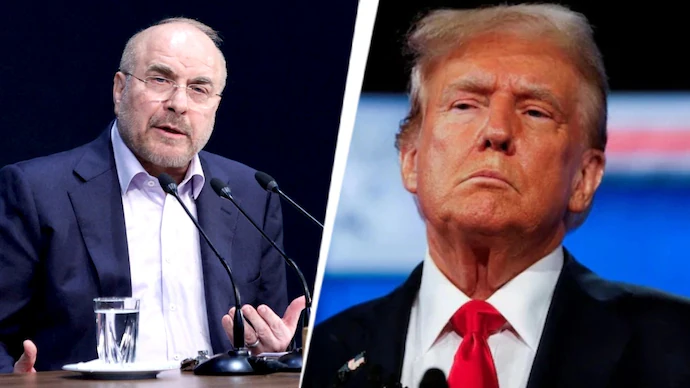


Global oil markets have been thrown into turmoil by a dizzying sequence of threats, denials, and diplomatic contradictions between Washington and Tehran, leaving traders, analysts, and even seasoned policymakers struggling to chart a clear course through one of the most volatile geopolitical standoffs in recent memory.
The chaos reached a peak last week when US President Donald Trump threatened to destroy Iran’s energy infrastructure unless it reopened the Strait of Hormuz, the narrow waterway through which roughly a fifth of the world’s oil supply passes. Tehran responded in kind, warning that any such escalation would see it ignite oil and gas wells across the Middle East — a scenario that analysts described as potentially catastrophic for global energy markets.
The exchange sent Brent crude surging to $113 a barrel on Monday as Trump’s deadline loomed. Then, in a dramatic reversal, the president pivoted to describing “very good and productive talks” with Tehran — a claim Iran’s military spokesman swiftly dismissed, saying the US was “negotiating with itself.” Oil prices plunged on the news of potential dialogue, with US crude touching as low as $84 a barrel before settling around $95 by Wednesday — a swing of nearly 30 dollars in the space of days.
Fake News and Financial Manipulation
Iran has been unequivocal in its rejection of any suggestion that peace talks are under way. Mohammad Bagher Ghalibaf, the speaker of Iran’s parliament, went further, alleging a deliberate disinformation campaign designed to move markets.
“Fake news is used to manipulate the financial and oil markets and escape the quagmire in which the US and Israel are trapped,” Ghalibaf said, as officials in Tehran vehemently denied reports — carried by US media outlets — that contacts had been established between the two countries via Pakistan.
The Boy Who Cried Peace
The episode is not without precedent. Writing in the Financial Times, markets commentator Robert Armstrong noted that this is not the first time Trump has played what he called “the boy who cried peace.” Two weeks prior, jittery markets calmed after the president declared the conflict was “very complete, pretty much” — only for hostilities to continue regardless.
Armstrong argued, however, that Trump’s peace signals, even if untethered from reality, do serve a purpose. They function as a “signal of intent” — evidence that the president is “really looking for an exit” from a conflict that has grown far more complicated than initially anticipated.
Weaponised Uncertainty
For market participants, the deeper problem is structural. Writing in The Telegraph, Tom Stevenson described Trump’s approach as “weaponised uncertainty” — a governing style so unpredictable that meaningful forecasting has become almost impossible.
Ask analysts what the consequences of a prolonged Hormuz closure would be, Stevenson noted, and the honest answer is that it “depends how long it goes on for” — a determination that ultimately comes down to “which side of the bed the president gets out of.” In a rare moment of candour for a market commentator, Stevenson concluded that the one thing he could say with complete confidence was “I don’t know — and nor does anyone else.”
That sentiment appears to extend to the White House itself. Andreas Kluth, writing on Bloomberg, observed that even the administration seems uncertain about its own next move. Internet commentators have taken to dubbing Trump “Don Tzu” — a pointed and unflattering contrast to Sun Tzu, the ancient Chinese military strategist and author of The Art of War — suggesting that a conflict conceived as a swift Venezuela-style operation to force regime change has slipped badly out of control.
Two Paths, No Clear Map
Analysts broadly agree that the US now faces two stark options. It can continue to escalate — bombing energy infrastructure and deploying ground forces — or it can pursue a “frozen conflict” framework that allows both sides to declare a version of victory and step back from the brink. Neither path is clean, and neither is certain.
The irony, as Kluth noted, is that Trump would have done well to heed the very strategist his critics compare him to. Sun Tzu wrote in The Art of War that “he who is destined to defeat first fights, and afterwards looks for victory” — a warning against rushing into conflict without a clear endgame that now reads as almost prophetic.
Market Outlook
For now, energy markets remain on edge. Brent crude’s extraordinary volatility — nearly $30 in price movement within a single week — has underscored just how exposed global supply chains are to the whims of a conflict with no clear resolution in sight. Traders are caught between fear of a supply shock and hope of a diplomatic off-ramp, with neither prospect reliable enough to bet heavily on.
Until the gap between Washington’s claims and Tehran’s denials narrows, or until one side blinks decisively, markets are likely to keep swinging — hostage, as Vivian Salama and Jonathan Lemire wrote in The Atlantic, to a conflict in which neither side has full control “over the conflict — or its narrative.”