
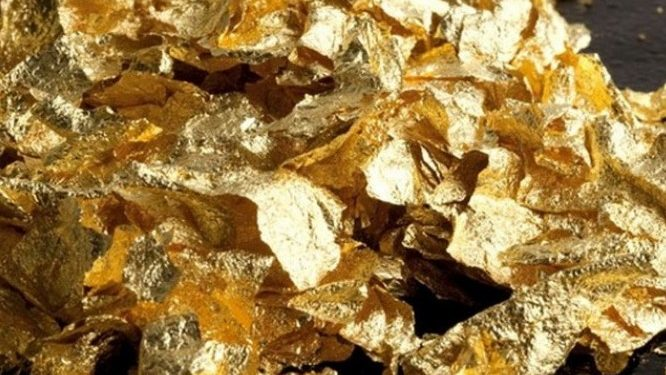

British mining company Shanta Gold Limited has announced one of Kenya’s largest-ever gold discoveries, valued at approximately Sh683 billion, in Kakamega County.
The discovery, located at the Isulu-Bushiangala underground mining project in Kakamega South Sub-county, marks a significant milestone in the country’s mineral exploration journey.
According to an Environmental Impact Assessment (EIA) report submitted to the National Environment Management Authority (NEMA), the company’s local subsidiary confirmed deposits amounting to 1.27 million ounces of gold, with an average grade of 11.43 grams per tonne.
Prepared by Kurrent Technologies Limited in partnership with South Africa’s Digby Wells Environmental, the report outlines plans for a large-scale underground mine spanning Musoli and Isulu locations, about 55 kilometres northwest of Kisumu.
“The Isulu and Bushiangala resources contain 1,270,380 ounces of gold and represent a net benefit to the region and Kenya as a whole,” the report notes.
Land Acquisition and Resettlement
To establish the mine, Shanta Gold Kenya Limited (SGKL) will require around 337 acres of land, primarily from private owners—an operation that will affect about 800 households. The company has identified six possible resettlement sites covering approximately 1,932 acres, offering affected families a choice between relocation within the region or monetary compensation.
Concerns have emerged among residents regarding displacement and compensation. The EIA records fears of “forceful evictions from ancestral lands,” underscoring the need for transparent communication and inclusive public participation.
SGKL has assured that all land transactions will follow a voluntary and negotiated process under Kenya’s Land Act (2012) and IFC Performance Standards (PS5). A detailed Resettlement Action Plan will guide compensation and livelihood restoration for affected families.
Mining Operations and Economic Impact
The proposed mine will employ Long Hole Open Stoping (LHOS) technology, a mechanised underground method designed to minimise surface disturbance. The operation will include a 1,500-tonne-per-day processing plant, tailings storage facility, waste rock dumps, administrative buildings, and a 12-megawatt power plant.
The project is estimated to require an initial investment of US$170–208 million (Sh22–27 billion), with annual operating costs of US$19 million (Sh2.5 billion). Its lifespan is projected at eight years, though further exploration could extend this period.
Once operational, Shanta Gold expects to pay US$4.3–4.7 million (Sh560–610 million) in royalties annually to the government, alongside a US$1.5 million (Sh195 million) Mineral Development Levy.
Additionally, under Kenya’s Mining (Community Development Agreement) Regulations, the company will share 1% of the value of gold produced directly with host communities.
Kakamega County, traditionally known for agriculture and artisanal mining, is projected to benefit through job creation, infrastructure development, and community projects. The mine is expected to create hundreds of direct and indirect jobs during both construction and production phases.
“Our goal is to develop a world-class underground operation that meets global safety and sustainability standards,” said SGKL General Manager Jiten Divecha, who signed the EIA report.
Environmental and Social Considerations
The project’s proximity to the Kakamega Forest, one of East Africa’s last tropical rainforests, has raised environmental concerns. The EIA emphasises the need for strict biodiversity protection, controlled blasting, and continuous water monitoring, particularly in the Yala and Isiukhu river catchments, which drain into Lake Victoria.
Cyanide, which will be used in gold processing, will be handled under international safety protocols, while mined-out areas will be backfilled with cemented aggregate to reduce land subsidence.
Archaeological surveys have also identified ceramic artefacts and sacred Mugumo trees, which will be preserved or relocated in consultation with local elders.
The report further includes a Human Rights Impact Assessment, highlighting the need to protect artisanal miners, women, and vulnerable groups, and to promote gender equity and youth employment within the project area.
Balancing Growth and Responsibility
Experts describe the Kakamega discovery as a potential economic game-changer for western Kenya, provided it is managed transparently and sustainably.
“If all environmental safeguards are adhered to, the project will continue to benefit both local communities and the country,” the EIA concludes.
NEMA is now reviewing the report before issuing a final decision on whether Shanta Gold can proceed with mine development. If approved, the project could position Kakamega as Kenya’s new frontier for large-scale gold mining, ushering in a new era for the region’s economy.

