

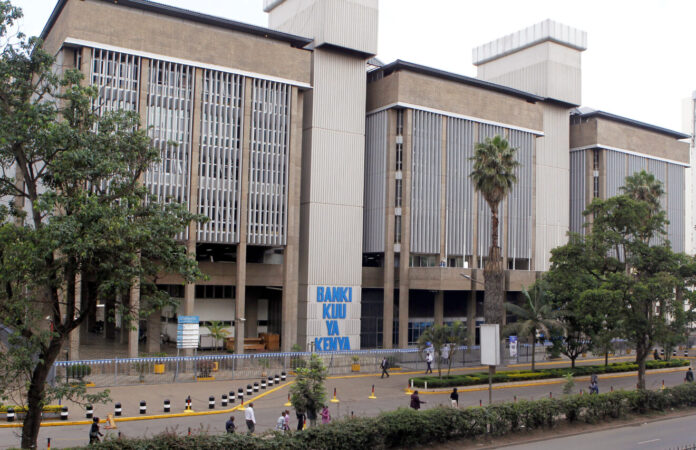

 left its benchmark lending rate unchanged on Monday, opting for policy continuity even as inflation edged higher and the economy posted its strongest quarterly growth in over a year.)
The Central Bank of Kenya (CBK) left its benchmark lending rate unchanged on Monday, opting for policy continuity even as inflation edged higher and the economy posted its strongest quarterly growth in over a year.
The Monetary Policy Committee (MPC) kept the Central Bank Rate (CBR) at 8.75 percent following its meeting, judging that the current stance continues to keep price growth in check without unsettling the shilling.
In a statement explaining the decision, the committee said the unchanged rate remains appropriate to keep inflation expectations anchored within the target band and to preserve exchange rate stability.
Inflation Edges Up, But Stays in Range
Kenya’s headline inflation rose slightly to 6.5 percent in July, from 6.4 percent in June. Core inflation, which strips out volatile food and energy prices, also inched up to 3.2 percent from 3.1 percent. Non-core inflation, by contrast, eased to 15.0 percent from 15.1 percent, a decline the CBK linked to softer energy-price pressures following government interventions such as fuel subsidies and a temporary cut to value-added tax on petroleum products.
Food prices remain the main source of concern in the inflation basket. The central bank flagged persistent increases in the cost of vegetables, including Irish potatoes, tomatoes, kale, cabbages and onions, as a key pressure point for households.
Looking ahead, the MPC said it expects inflation to hold within its target range in the near term, though that outlook is conditioned on the Middle East conflict not escalating further.
Lending Rates Continue to Fall, Credit Growth Firms Up
Even with the CBR unchanged, commercial banks have kept trimming what they charge borrowers. The average lending rate fell to 14.3 percent in July, down from 14.4 percent in June and sharply lower than the 17.2 percent recorded in November 2024.
Cheaper credit appears to be feeding through to demand. Private-sector credit growth held strong at 10.2 percent in July, only slightly below June’s 10.6 percent, and a dramatic turnaround from the -2.9 percent contraction recorded in January 2025. The CBK pointed to increased borrowing in trade, building and construction, agriculture and consumer durables as evidence that lower rates are stimulating credit uptake across the economy.
Banks Report Improving Loan Books
The health of the banking sector also improved. Gross non-performing loans, as a share of total loans, dropped to 14.6 percent in July from 15.4 percent in April and 17.6 percent a year earlier in August 2025. CBK said the improvement was broad-based, spanning manufacturing, construction, trade, agriculture and real estate, and noted that lenders have continued setting aside provisions against bad loans.
Liquidity and capital adequacy across the banking sector remained strong, the regulator added.
Growth Beats Prior Year, CBK Sees Momentum Continuing
Kenya’s economy expanded 5.3 percent in the first quarter of 2026, up from 4.9 percent in the same period last year, with the industrial and services sectors driving the acceleration.
The CBK is projecting full-year growth of 4.9 percent for 2026 and 5.3 percent for 2027, up from 4.6 percent in 2025, citing resilience in services, strength in industry and steady agricultural output as supporting factors.
The MPC cautioned, however, that risks to the outlook remain elevated. It cited the ongoing conflict in the Middle East, high global energy prices, uncertainty around trade policy, and the potential fallout from El Niño weather patterns as factors that could weigh on growth or reignite price pressures.
Reserves Provide a Buffer
CBK reported foreign exchange reserves of US$15.249 billion, equivalent to 6.3 months of import cover — a cushion officials say provides protection against both domestic and external shocks.
With inflation still within range, credit flowing more freely, and growth outpacing last year’s pace, the central bank’s message was one of steady-as-she-goes: hold the rate, monitor external risks, and let the current policy stance continue working through the economy.