

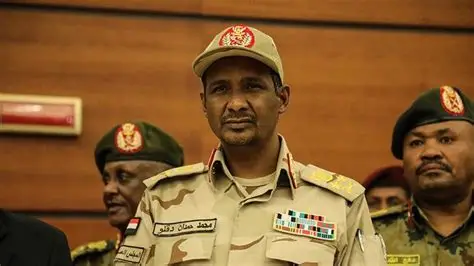

 commander Mohamed Hamdan Dagalo, widely known as Hemedti, and 15 other senior RSF leaders to death by hanging in absentia)
A Sudanese anti-terrorism court has sentenced Rapid Support Forces (RSF) commander Mohamed Hamdan Dagalo, widely known as Hemedti, and 15 other senior RSF leaders to death by hanging in absentia. The landmark ruling, delivered in Port Sudan, marks the first time the leadership of the RSF has been handed death sentences since Sudan’s devastating civil war erupted in April 2023.
The court found Hemedti and his co-defendants guilty over their alleged roles in the assassination of former West Darfur Governor Khamis Abdallah Abakar, who was killed during intense fighting in Darfur in June 2023. Prosecutors also accused the defendants of committing war crimes and crimes against civilians during the conflict in the region.
Among those sentenced were several high-ranking RSF commanders, including Hemedti’s brother and deputy, Abdel Rahim Hamdan Dagalo, along with other senior military figures accused of directing operations in Darfur. Since the accused are not in government custody, the sentences were issued in absentia, meaning they cannot be carried out unless the individuals are arrested and brought before Sudanese authorities.
The ruling comes as Sudan’s civil war continues to inflict severe humanitarian consequences. The conflict between the Sudanese Armed Forces (SAF) and the RSF has displaced millions of people, devastated infrastructure, and triggered widespread allegations of atrocities, including killings, sexual violence, and attacks on civilians. International organizations, including the United Nations and Amnesty International, have recently accused the RSF of committing serious violations that may amount to genocide and crimes against humanity, allegations the RSF has consistently denied.
Legal analysts say the verdict carries significant symbolic and political weight, demonstrating the Sudanese government’s intention to hold RSF leaders accountable. However, questions remain over its practical impact, as Hemedti and several senior commanders remain outside the control of Sudanese authorities.
The decision is also expected to deepen divisions between the warring sides at a time when international efforts to broker a ceasefire have repeatedly stalled. Observers warn that while the ruling may strengthen demands for accountability, it could also complicate future negotiations aimed at ending one of Africa’s worst humanitarian crises.