

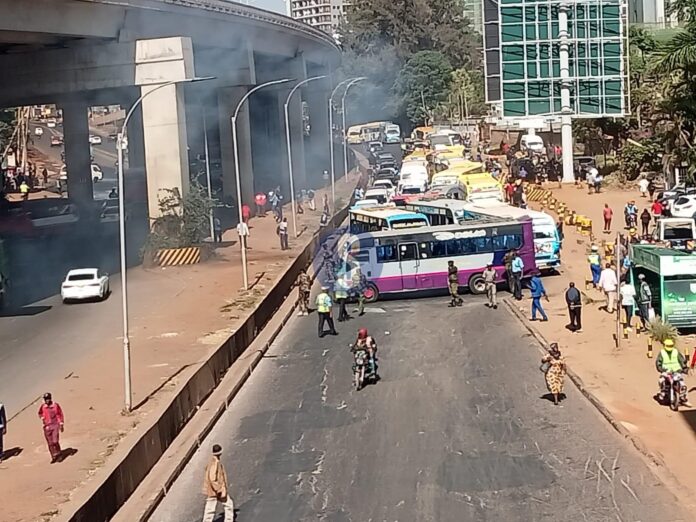


Matatu operators have called off their strike for one week following an agreement with the government to hold high-level consultations aimed at resolving a bitter dispute over fuel prices that had paralysed public transport across the country.
Interior Cabinet Secretary Kipchumba Murkomen announced the suspension on Monday, saying both sides had agreed on the urgent need for structured dialogue before any further industrial action.
Government Calls for Dialogue
“There was need for negotiations with the stakeholders at a high level and they will take place within the next one week,” Murkomen said, adding that the temporary halt to the strike was necessary to restore normalcy and create space for meaningful engagement.
“The strike to be suspended for one week to provide an avenue for consultations,” he said.
The announcement brings temporary relief to millions of Kenyans who had endured days of transport chaos triggered by protests over rising fuel prices. Many commuters were left stranded at bus stops, forced to walk long distances or pay significantly inflated fares as the industrial action took hold.
Transport Sector Welcomes the Breakthrough
Federation of Public Transport Sector CEO Kushian Muchiri welcomed the development, confirming that negotiations had already begun in earnest. However, he did not shy away from expressing frustration that earlier engagement could have prevented the disruption altogether.
“As much as we would have been happy, we are also glad that at least negotiations have started in earnest,” Muchiri said.
“Had we been taken seriously on Friday we would not be here,” he added pointedly, before calling on all transport sector members to immediately resume operations in the interest of their customers.
Muchiri struck a confident note on the outcome of the talks, promising members that the sector would deliver results within the agreed timeline.
“We want to assure our members that within the next seven days we shall have done the best of negotiations,” he said.
Deputy President Defends Fuel Levy, Announces Diesel Reduction
Separately, Deputy President Kithure Kindiki weighed in on the fuel pricing debate, defending the government’s decision to retain a portion of the fuel levy, arguing that the funds remain indispensable for road construction and the maintenance of critical infrastructure.
“The remaining portion of tax is essential for the construction of our road infrastructure and the maintenance of the roads to support the economy,” Kindiki said.
The Deputy President acknowledged the need to protect citizens from the full brunt of rising fuel costs but stressed that any relief measures must be carefully balanced against the funding requirements of other essential public services.
“The right balances must be maintained to ensure that as we sort out the fuel price issue, we do not disrupt the funding for other equally important sectors like education and social services,” he said.
In a move signalling the government’s willingness to ease the pressure, Kindiki announced a Sh10 reduction in the price of diesel per litre, describing it as part of a broader effort to cushion Kenyans from the impact of a global fuel price surge.
What Happens Next
With operators back on the road and talks now formally underway, the coming week will be critical. Both sides have set clear expectations — operators want tangible relief from the elevated cost of running vehicles, while the government must navigate the twin pressures of public demand for cheaper fuel and the need to protect revenues that fund roads, schools and social programmes.
If the talks fail to produce a satisfactory outcome within the seven-day window, a return to industrial action remains a real possibility — one that neither side, nor the millions of Kenyans who depend on matatus daily, can afford.